| ||||||||||||||||||||||||||
Diesel dips 1.4p to 196.8p, but electric vans still pay back past 8,738 milesCCC warns against weakening the ZEV Mandate; London diesel van registrations hit a record · 8 stories · 24 Nov 2026 | ||||||||||||||||||||||||||
Diesel's small fall does little to shift the electric van business case, which still turns on mileage and charging access. That access is exactly what the Climate Change Committee and Logistics UK are pressing government on this week, calling for faster grid connections, cheaper public charging and a ZEV Mandate that keeps pushing adoption rather than easing it for fleets already weighing the numbers. | ||||||||||||||||||||||||||
| ||||||||||||||||||||||||||
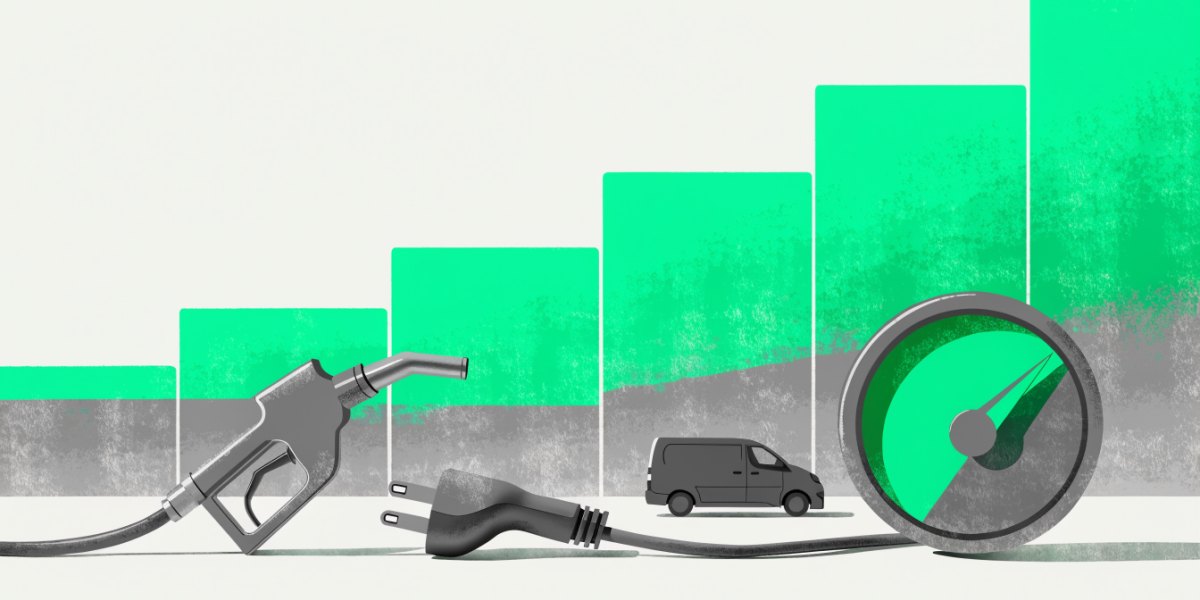 Illustration · THRIVE | ||||||||||||||||||||||||||
Diesel, UK average196.8p (-1.4p on the week, -2.6p in four weeks). Pump price per litre, week of 16 Nov. Petrol 167.1p. See the data. Most of the four-week fall came this week. That helps fuel budgets set at higher prices, but it is not a trend to bank on. We think fleets should check that fuel card pricing passes the drop through promptly and that budgets reflect current pump prices. We would not lock in fixed-price fuel deals on the strength of a short dip. Petrol remains markedly cheaper per litre, which matters for car-derived vans and hybrid pool cars. Fleet Cost Index2.64× (-0.02 on the week). A diesel van costs 2.64× as much to fuel per mile as an electric one: 24.9p against 9.4p at HMRC's advisory electric rates, week of 16 Nov. See the data. The gap barely moved, so cheaper diesel narrows the electric advantage only at the margin. The comparison rests on HMRC's advisory electric rates rather than any fleet's actual tariffs. A fleet whose vans charge mostly at a depot or at drivers' homes is likely to do better than this. One relying on public rapid chargers will do worse. The sensible move is to rebuild the comparison with your own charging mix and electricity contract before drawing conclusions. Electric van break-even8,738 miles (a year). Above this, fuel savings cover an electric van's list-price premium after the van grant, spread over four years. At 18,000 miles a year it saves £2,781. See the data. Below this mileage, fuel savings alone do not recover the grant-adjusted premium over four years. Above it, the savings build quickly. We think fleets should sort vans by actual annual mileage from telematics rather than fleet averages, and treat the highest-mileage vans as first candidates at replacement. Check the figure against your own lease or purchase prices, because negotiated premiums vary. Maintenance, residual values and payload belong in the same calculation. Public rapid charging82p/kWh (3.1× home). Zapmap average for October, against 26.3p under the household price cap from 1 Oct. Slower public chargers average 54p. See the data. The premium for public rapid charging over home charging is what erodes the electric case. A van that relies mainly on rapid chargers can lose much of its per-mile advantage over diesel. Slower public chargers are cheaper but still well above home rates. The sensible move is to plan around depot or home charging first and ask charge card suppliers for negotiated rates. We would also wait for Ofgem's price cap announcement on 25 Nov before setting next quarter's home charging reimbursement. Advisory fuel rates, from 1 SeptDiesel 15p to 22p. HMRC pence per mile for company car business travel, by engine size: diesel 15p, 16p, 22p. Electric 7p at home, 15p public. Next review 1 Dec. See the data. These rates remain the safe basis for reimbursing company car business mileage until the review on 1 Dec. The gap between the home and public electric rates matters for policy. We think fleets should check that drivers who charge at home are not routinely claiming the public rate without receipts or charging records to support it. Wait for the 1 Dec publication before updating expense guidance or payroll settings, and diary a check that systems pick up any change promptly. Coming up
How these figures are compiledTHRIVE publishes these figures every Monday from its own data tables: pump prices from DESNZ's weekly road fuel prices; the Fleet Cost Index and the break-even are THRIVE's own calculations from those pump prices and HMRC's advisory electric rates for company cars (70% home, 30% public charging), used as a proxy because there is no official electric-van rate, with the break-even using manufacturer list prices less the van grant; public charging prices from Zapmap's charging price index and the household rate from Ofgem's price cap; advisory fuel rates from HMRC. Each figure is shown only while it is current; one whose source has not published a new release in time is left out rather than shown out of date. The full series are in THRIVE data. (Source: Department for Energy Security and Net Zero · Zapmap and Ofgem · HM Revenue & Customs) | ||||||||||||||||||||||||||
| ||||||||||||||||||||||||||
| ||||||||||||||||||||||||||
POLICY & TAX | ||||||||||||||||||||||||||
Climate Change Committee warns Transport Secretary against weakening ZEV MandateIn a letter to Heidi Alexander on the Government's ZEV Mandate review, the CCC says a weaker mandate would put UK climate targets at risk and raise oil imports. It asks ministers to change how plug-in hybrids are credited, tackle barriers to electric van adoption and cut the cost of public charging. | ||||||||||||||||||||||||||
 Illustration · THRIVE | ||||||||||||||||||||||||||
The Climate Change Committee (CCC) has published a letter from its chair, Nigel Topping, to Transport Secretary Heidi Alexander. The letter sets out the Committee's position on the Government's current review of the ZEV Mandate and is accompanied by new evidence. Published on 18 November 2026, it warns that the UK is likely to miss the legal climate targets set by Parliament if the Government weakens the mandate. | ||||||||||||||||||||||||||
MARKET & BUSINESS | ||||||||||||||||||||||||||
London diesel vans registered to businesses hit record high as Clean Cities ranks capital 16th for clean airDepartment for Transport figures put diesel vans registered to London businesses at 100,761 at the end of 2025, against 5,582 company-registered battery-electric vans. Campaigners are urging the Mayor to bring in a zero-emission zone for freight. | ||||||||||||||||||||||||||
 Illustration · THRIVE | ||||||||||||||||||||||||||
Campaign group Clean Cities has ranked Greater London 16th out of 40 European cities for clean air and given the capital a 'C' grade, according to Local Democracy Reporting Service (LDRS) reporting carried by Asian Standard. Clean Cities warns that tougher EU air pollution limits coming into force in 2030 could leave London further behind. Its report says London would fail all four key measures if it were required to meet the new EU standards. | ||||||||||||||||||||||||||
MARKET & BUSINESS | ||||||||||||||||||||||||||
RHA calls for HGV decarbonisation roadmap and lower duty on sustainable alternative fuelsThe Road Haulage Association wants a five-year transition and lower duty on certified sustainable fuels such as HVO, which currently pay the same duty and VAT as diesel. It cites SMMT figures showing UK electric truck sales down about 30% on 2025. | ||||||||||||||||||||||||||
 Illustration · THRIVE | ||||||||||||||||||||||||||
The Road Haulage Association (RHA) is calling on the UK government to set out a clear decarbonisation roadmap for HGVs, which it describes as vital for meeting targets in a commercially sustainable way, trans.iNFO reported on 17 November. | ||||||||||||||||||||||||||
CHARGING & ENERGY | ||||||||||||||||||||||||||
Petrol prices down 9.5p a litre from October peak, AA saysThe AA puts average UK petrol at 165.2p a litre and expects the fall to reach 10p this week. Diesel, which touched £2 a litre in early October, starts the week at 195.4p, a smaller relief for fleets running diesel vehicles. | ||||||||||||||||||||||||||
 Illustration · THRIVE | ||||||||||||||||||||||||||
Average UK petrol prices stood at 165.2p a litre at the start of the week of 16 November, according to the AA. That is 9.5p below the 174.7p peak in the first week of October. | ||||||||||||||||||||||||||
VEHICLES & LAUNCHES | ||||||||||||||||||||||||||
Ford says electric Transit City could save urban van operators over €4,000 a year in energy costs versus dieselFord Pro's cost analysis puts the UK saving at over £3,500 per van a year with home charging, or over £4,200 on off-peak rates, against a diesel Transit Custom. The figures assume 26,400 km a year and best-case WLTP City efficiency, and exclude charging losses. | ||||||||||||||||||||||||||
 Illustration · THRIVE | ||||||||||||||||||||||||||
Ford Pro has published a total-cost-of-ownership analysis by Stewart Lanceman, its European TCO manager. It claims a typical urban van operator could save over €4,000 a year in energy costs alone by switching from a diesel van to the electric Transit City. Ford says the all-new Transit City is now reaching dealers across Europe. | ||||||||||||||||||||||||||
CHARGING & ENERGY | ||||||||||||||||||||||||||
Logistics UK report says operators need faster grid connections and viable electricity prices to electrifyThe Energy and Infrastructure Insight Report 2026 is built on 14 interviews with logistics and energy stakeholders. It sets out the grid capacity, charging and electricity-cost problems facing operators investing in electric vehicles. Logistics UK is using it to press government as COP31 puts electrification at the centre of climate talks. | ||||||||||||||||||||||||||
 Illustration · THRIVE | ||||||||||||||||||||||||||
Logistics UK has published its Energy and Infrastructure Insight Report 2026, which focuses on the energy and infrastructure the logistics sector needs to move to a low-carbon future. The report draws on 14 in-depth interviews with stakeholders from the energy and logistics sectors. It examines the wider energy ecosystem, grid connections, technology and innovation, and charging infrastructure. According to Transport+Energy's account of the launch, it also covers grid decarbonisation, hydrogen and low-carbon fuels. | ||||||||||||||||||||||||||
VEHICLES & LAUNCHES | ||||||||||||||||||||||||||
Volkswagen ID Buzz Beach camping version on sale from £54,000The overnight-stay package for the electric ID Buzz people carrier adds a foldable rear double bed, a modular dining set and black-out curtains, and is offered on both five- and seven-seat versions from December. | ||||||||||||||||||||||||||
 Illustration · THRIVE | ||||||||||||||||||||||||||
Volkswagen has revealed the ID Buzz Beach, a camping version of its electric ID Buzz people carrier. Autocar reports that it goes on sale next month, in December, from £54,000. For nights away it has a double bed that folds out in the back, a compact modular table and seats, curtains to black out the windows and vent grilles for the front side windows. | ||||||||||||||||||||||||||
|