

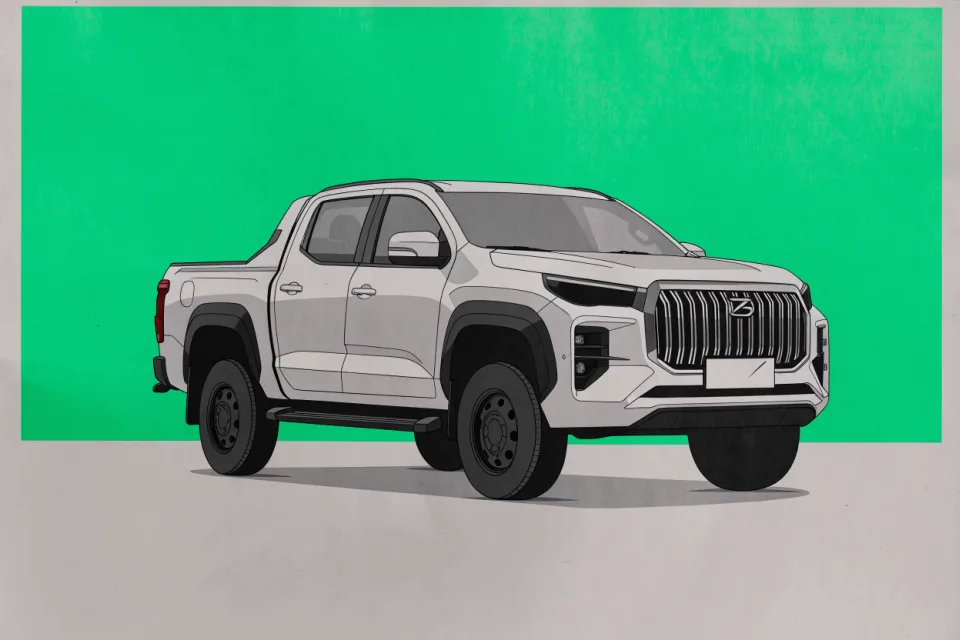
Maxus T60 MAX double cab diesel
Maxus T60 MAX 2.0 Diesel 8AT 4WD
The Maxus T60 MAX 2.0 Diesel 8AT 4WD has a 1,050kg payload.
Diesel · pickup · double cab · on sale
Dimensions
Price
| List price (excluding VAT) | Not yet verified |
|---|
Engine and economy
Load
Ownership
| Warranty | Not yet verified |
|---|
THRIVE verdict
Maxus T60 MAX leads its class on towing, with payload that sits at the pickup median.
The headline number here is towing: 3,500kg braked, the highest figure of any pickup in our database, shared only by the strongest rivals. Payload sits at 1,050kg, in line with the class median rather than standing out, but still enough for most trade and fleet loads. Gross vehicle weight is 3,250kg.
Load space is workmanlike rather than generous: a load length of 1,485mm at the floor and a maximum load height of 530mm. Overall length runs to 5,395mm with a height of 1,870mm, so this is a full-size double cab that needs normal pickup parking and height clearance checks on site.
Against named rivals, the Volkswagen Amarok Style matches its 1,050kg payload and 3,500kg towing at £46,870 ex VAT, while the Toyota Hilux Active undercuts both on price at £34,670 ex VAT with slightly less payload. The Isuzu D-Max EV offers the same towing but only 163 miles of range, so it suits short, predictable routes rather than towing-heavy work.
Best for
- operators who regularly tow at or near 3,500kg
- mixed trade loads needing a solid mid-pack payload
- fleets wanting a full-size double cab pickup
Think twice
- load floor length of 1,485mm may be tight for long materials
- CO2 at 239g/km on the WLTP cycle, worth weighing against business emissions targets
- compare against the Volkswagen Amarok Style, which matches payload and towing
Written 8 October 2026 from the verified figures on this page and the rest of the THRIVE database, and checked figure by figure before publishing. How we check
Could you go electric?
How this van compares with Isuzu D-Max EV eDL40 4x4 Double Cab, the closest alternative across the electric line, for a typical working day.
Workable, with planning
- Range. 100 miles a day is close to a planning range of about 114 miles: workable, but cold or heavily loaded days may need a top-up.
- Payload. The electric version carries 30kg less (1,020kg against 1,050kg).
- Energy. Charging at a small-business depot costs about 10p a mile against 20.9p for diesel: roughly £2,725 a year less at 25,000 miles.
How this is worked out
- Planning range is 70% of the official 163.2-mile WLTP figure, allowing for winter weather and a full load.
- Energy use 0.35 kWh a mile: THRIVE's typical figure for an electric van (this van's usable battery is not verified).
- Diesel 165.48p a litre excluding VAT (DESNZ, week of 2 November 2026); a typical 36mpg.
- Electricity: 28.59p/kWh at a small-business depot (DESNZ, excluding VAT), 26.32p at home as the driver pays (Ofgem price cap), 65.83p on public rapid chargers (Zapmap, excluding VAT).
- 250 working days a year. List prices exclude VAT and options; running costs exclude servicing, insurance, tax and residual values.
Indicative only: a guide to whether electric is worth a closer look, not a quote. For whole-fleet costs see fleet charging costs and van break-even.
Alternatives worth considering
- Direct competitorVolkswagen Amarok Style 240PS 3.0 TDI 10sp Automatic 4MOTIONA similar-sized pickup from Volkswagen.
- Direct competitorToyota Hilux Active 2.8 Diesel 48V Automatic 4WDA similar-sized pickup from Toyota.
- Electric alternativeIsuzu D-Max EV eDL40 4x4 Double CabElectric, 163.2 miles official range.
- Direct competitorFord Ranger Double Cab XLT 2.3 TIVCT EcoBoost 281PS 10-speed automatic PHEV 4WDA similar-sized pickup from Ford.
Chosen from published pickups in the THRIVE database with a similar load area; reasons compare verified figures only.
The Tuesday briefing
The week's fleet numbers and news, every Tuesday morning. Free.
One email a week. Unsubscribe in a click.
Sources
1 document: MAXUS UK (Harris Group)
- MAXUS UK (Harris Group), retrieved 5 October 2026. Supports: load length (at floor), load width (maximum), load height (maximum), overall length, overall height, co2 emissions, test cycle, gross vehicle weight, payload, towing capacity (braked). MAXUS T60 MAX A4 brochure '900434-harris-maxus-t60-max-a4-print-high-res' (PDF modified 19 Aug 2026), linked as 'Download brochure' from saicmaxus.co.uk/our-range/new-vans/t60-max/ and served from that site's CMS CDN (bluesky-cogcms); p4 TECHNICAL SPECIFICATIONS, single T60 MAX version. LOAD BED ('Cargo Box'), order taken as length x width x height following the row above; unlabelled as to floor/top.
About these figures
- Specifications verified: 16 October 2026, against the manufacturer documents listed under Sources.
- Latest source added: 16 October 2026, the last time a figure on this page was added or corrected.
- Verdict written: 8 October 2026. It uses only the verified figures here and the THRIVE database; every number in it is checked against those figures, and it is rewritten only when they change.
Specifications vary by trim, engine, battery, length and roof height; these are for the Maxus T60 MAX 2.0 Diesel 8AT 4WD as named, a typical fleet specification. Fuel economy is the official WLTP combined figure; real-world economy loaded will be lower. Check the manufacturer's current price list before ordering. If a figure here has changed, tell us on our corrections page.