

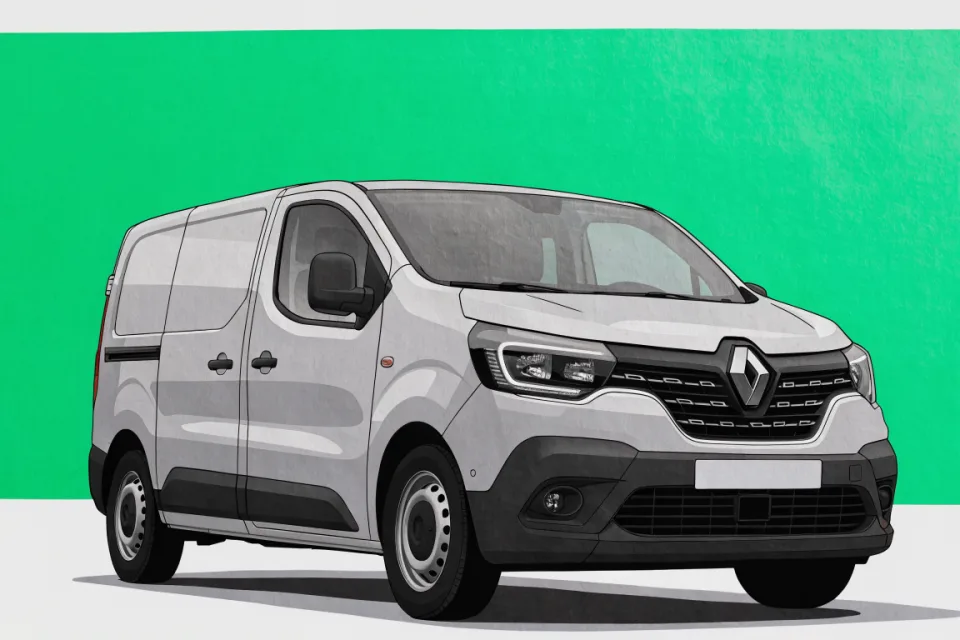
Renault Trafic Van L2H1 crew van diesel
Renault Trafic Van LL30 Blue dCi 130 Advance Crew Van MY26.5
The Renault Trafic Van LL30 Blue dCi 130 Advance Crew Van MY26.5 has a 130PS diesel engine, 40.9mpg official economy and a 978kg payload. List price £33,550 excluding VAT.
Diesel · medium van · L2 H1 · crew van · on sale
Dimensions
Price
| List price (excluding VAT) | £33,550[3] |
|---|
Engine and economy
Load
Ownership
| Warranty | 3yr/unlimited-then-100,000mi warranty (Renault UK LCV range); 12yr anti-corrosion[3] |
|---|
Renault Trafic Van L2H1 crew van diesel price changes
No list price change recorded for the Renault Trafic Van L2H1 crew van diesel since THRIVE first recorded its price on 21 September 2026.
List prices excluding VAT, from the manufacturer's own UK price lists. A date marked "recorded" is the day THRIVE took in a new price list that carried no date of its own.
Compare the Renault Trafic with
- Ford Transit Custom vs Renault Trafic: price, payload, load space and size side by side
- Fiat Scudo vs Renault Trafic: price, payload, load space and size side by side
- Renault Trafic vs Ford Transit City: price, payload, load space and size side by side
- Renault Trafic vs Peugeot Expert: price, payload, load space and size side by side
Other Renault Trafic versions
| Version | Fuel | Payload | Range / economy | Price ex VAT |
|---|---|---|---|---|
| Renault Trafic Van L1H1 diesel | Diesel | 1,066 kg | 42.2 mpg | £30,300 |
| Renault Trafic Van L2H1 diesel | Diesel | 1,093 kg | 41.5 mpg | £31,050 |
| Renault Trafic Van E-Tech electric L1H1 | Electric | - | - | - |
| Renault Trafic Van E-Tech electric L2H1 | Electric | - | - | - |
Every length, roof and fuel side by side, with a configurator, on the Renault Trafic page.
Could you go electric?
How this van compares with Citroën ë-Dispatch Crew Van XL Electric 136hp Automatic Enterprise (75kWh), the closest alternative across the electric line, for a typical working day.
Electric could work: check the points below
- Range. 100 miles a day sits comfortably inside a planning range of about 136 miles, so an overnight charge covers the day.
- Payload. The electric version carries 33kg more (1,011kg against 978kg).
- Towing. Braked towing: 1,000kg electric, 2,500kg diesel.
- Energy. Charging at a small-business depot costs about 10.2p a mile against 18.4p for diesel: roughly £2,050 a year less at 25,000 miles.
- Price. The electric version lists for £5,810 more after the £5,000 zero emission van and truck grant, which the energy saving covers in about 2.8 years.
When the diesel is the more practical choice
- Towing more than 1,000kg.
How this is worked out
- Planning range is 70% of the official 194-mile WLTP figure, allowing for winter weather and a full load.
- Energy use 0.356 kWh a mile: the usable battery divided by the official range.
- Diesel 165.48p a litre excluding VAT (DESNZ, week of 2 November 2026); the Renault Trafic Van LL30 Blue dCi 130 Advance Crew Van MY26.5's official 40.9mpg.
- Electricity: 28.59p/kWh at a small-business depot (DESNZ, excluding VAT), 26.32p at home as the driver pays (Ofgem price cap), 65.83p on public rapid chargers (Zapmap, excluding VAT).
- 250 working days a year. List prices exclude VAT and options; running costs exclude servicing, insurance, tax and residual values.
Indicative only: a guide to whether electric is worth a closer look, not a quote. For whole-fleet costs see fleet charging costs and van break-even.
Alternatives worth considering
- Direct competitorMercedes-Benz Vito 116 Crew Van PRO L2£8,490 more, 205kg less payload, 0.4m³ less load space.
- Direct competitorFiat Professional Scudo Panel Van M Diesel 120hp Manual MY26.5£3,545 cheaper, 195kg more payload, 1.3m³ more load space.
- Electric alternativeCitroën ë-Dispatch Crew Van XL Electric 136hp Automatic Enterprise (75kWh)Electric, 194-230 miles official range, £10,810 more.
- Direct competitorNissan Primastar Van L1 2.0 dCi 130 Manual Acenta MY26£860 cheaper, 1.8m³ more load space.
Chosen from published medium vans in the THRIVE database with a similar load area; reasons compare verified figures only.
Head to head: Renault Trafic vs Ford Transit Custom · Renault Trafic vs Fiat Scudo · Renault Trafic vs Ford Transit City · Renault Trafic vs Peugeot Expert
The Tuesday briefing
The week's fleet numbers and news, every Tuesday morning. Free.
One email a week. Unsubscribe in a click.
Sources
5 documents: Renault UK
- Renault UK, published 1 July 2026, retrieved 4 October 2026. Supports: load width (maximum), load width between wheel arches, overall length, overall width (excluding mirrors). Trafic Van technical specification, "Model year 26.5, 1 July 2026", page 6, "04. dimensions Crew Van" table (LL30 column)
- Renault UK, retrieved 4 October 2026. Supports: load height (maximum), overall height. official UK Trafic Van diesel page; per-version dimensions data embedded in the page (dimensions tab / version comparator); "Interior Headroom" used as max internal load height; tech spec panel-van "maximum loading area height" also 1387
- Renault UK, retrieved 21 September 2026. Supports: list price (excluding vat), engine power, official fuel economy, co2 emissions, test cycle, warranty.
- Renault UK, retrieved 25 September 2026. Supports: fuel tank, gross vehicle weight.
- Renault UK, retrieved 16 October 2026. Supports: payload, load volume, towing capacity (braked). Renault UK Trafic tech spec MY26.5, Crew Van LL30 Advance Blue dCi 130: max payload 978 kg. Supersedes 1122 (business.renault.co.uk comparator widget). 1122 falls outside the Trafic eBrochure's own crew range 'max payload (kg) 881-1,013', and 3,070 - 1122 would make the 6-seat crew lighter than the panel van; 978 = 3,070 - 2,092 mass in running order.
About these figures
- Specifications verified: 16 October 2026, against the manufacturer documents listed under Sources.
- Latest source added: 16 October 2026, the last time a figure on this page was added or corrected.
Specifications vary by trim, engine, battery, length and roof height; these are for the Renault Trafic Van LL30 Blue dCi 130 Advance Crew Van MY26.5 as named, a typical fleet specification. Fuel economy is the official WLTP combined figure; real-world economy loaded will be lower. Check the manufacturer's current price list before ordering. If a figure here has changed, tell us on our corrections page.