

The numbers, 26 Oct: Diesel eases to 199.3p but remains 3.8p up on four weeks ago
A small weekly fall does little to change the picture. Electric vans remain far cheaper per mile, and any van doing more than 8,561 miles a year looks worth costing as electric.
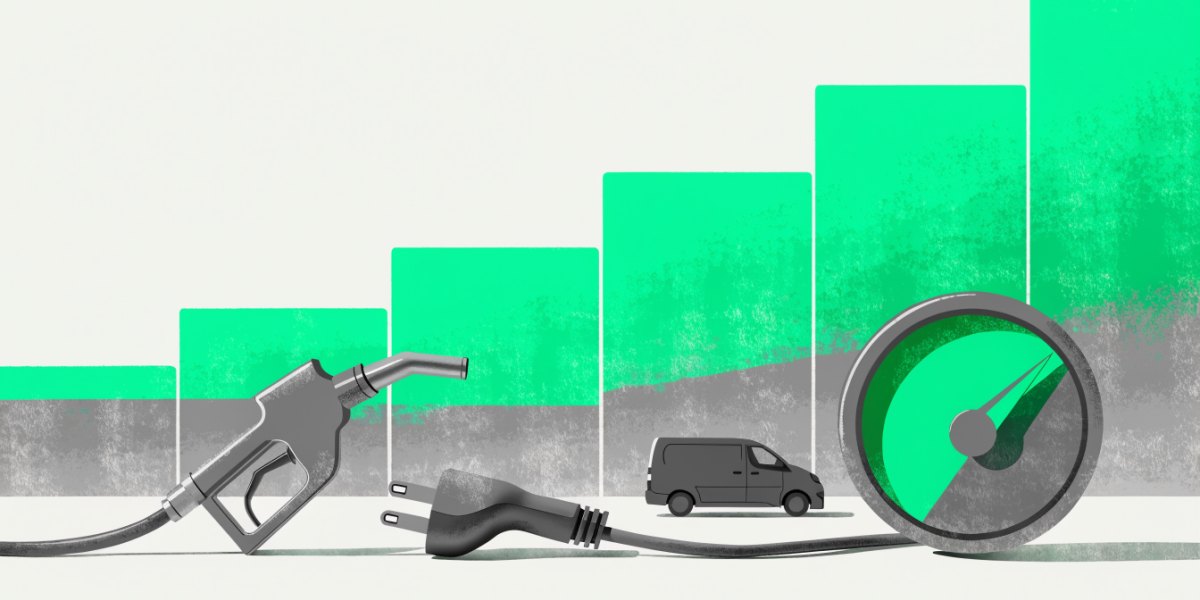
Diesel, UK average
199.3p (-0.7p on the week, +3.8p in four weeks). Pump price per litre, week of 19 Oct. Petrol 174.6p. See the data.
The weekly dip is small next to the rise over four weeks, so budgets set on early autumn prices are likely to be running short. We think fleets should re-run their fuel forecast at current pump prices rather than wait for a fall that may not come. Check fuel-card reports for drivers filling at motorway sites, and review whether any fuel surcharges agreed with customers still reflect what diesel actually costs.
Fleet Cost Index
2.68× (-0.01 on the week). A diesel van costs 2.68× as much to fuel per mile as an electric one: 25.2p against 9.4p at HMRC's advisory electric rates, week of 19 Oct. See the data.
The ratio barely moved, and that matters. The running-cost gap between diesel and electric vans is wide and stable rather than a passing spike. At 25.2p against 9.4p a mile, the saving on a busy van adds up quickly. The sensible move is to rank your diesel vans by annual mileage and put the highest-mileage ones first in the queue for replacement quotes, using your own telematics rather than averages.
Electric van break-even
8,561 miles (a year). Above this, fuel savings cover an electric van's list-price premium after the van grant, spread over four years. At 18,000 miles a year it saves £2,839. See the data.
That threshold is low enough that many working vans will clear it comfortably, and a high-mileage van comes out well ahead. But it rests on list prices and the van grant. We think fleets should ask suppliers for actual lease or purchase quotes, including any discounts, and check payload and range against real routes before assuming the saving. Vans covering short annual distances may still be better kept on diesel for now.
Public rapid charging
79p/kWh (3.0× home). Zapmap average for September, against 26.3p under the household price cap from 1 Oct. Slower public chargers average 54p. See the data.
At this premium, rapid charging erodes much of the electric advantage for vans that cannot charge at a depot or at a driver's home. The sensible move is to work out how much of each van's charging could happen at base or at home, price depot chargepoints, and treat rapid charging as a top-up. Where public charging is unavoidable, build slower 54p chargers into route plans and ask suppliers about charge cards with negotiated rates.
Electric share of new registrations, September
Cars 28.3% · Vans 9.6%. SMMT figures. This year's ZEV mandate targets: cars 33%, vans 24%. See the data.
Vans are further behind their mandate target than cars, and that may influence how electric vans are priced and allocated. We would not assume discounts will appear. It is reasonable, though, to ask dealers and leasing companies directly what terms they can offer on electric vans before the 2027 targets apply on 1 Jan 2027. Compare those quotes against diesel on whole-life cost rather than monthly rental alone.
Advisory fuel rates, from 1 Sept
Diesel 15p to 22p. HMRC pence per mile for company car business travel, by engine size: diesel 15p, 16p, 22p. Electric 7p at home, 15p public. Next review 1 Dec. See the data.
These rates set what you reimburse company car drivers for business fuel. With diesel close to current pump levels, drivers in the lower bands may find the rates fall short of what they pay. Check that your mileage claims policy matches the rates from 1 Sept, and note the gap between the home and public electric rates, which matters for drivers without home charging. The next review is 1 Dec, so diary a policy update then.
Coming up
- 1 Dec 2026: HMRC advisory fuel rates change
- 1 Jan 2027: ZEV mandate 2027 targets apply
- 6 Apr 2027: New tax year: company car tax rates step
How these figures are compiled
THRIVE publishes these figures every Monday from its own data tables: pump prices from DESNZ's weekly road fuel prices; the Fleet Cost Index and the break-even are THRIVE's own calculations from those pump prices and HMRC's advisory electric rates for company cars (70% home, 30% public charging), used as a proxy because there is no official electric-van rate, with the break-even using manufacturer list prices less the van grant; public charging prices from Zapmap's charging price index and the household rate from Ofgem's price cap; registration shares from SMMT's monthly figures; advisory fuel rates from HMRC. Each figure is shown only while it is current; one whose source has not published a new release in time is left out rather than shown out of date. The full series are in THRIVE data.
How THRIVE sources and checks its stories · Corrections, and how to report an error
EVA England calls for eVED delay to 2030 and EV benefit-in-kind rates to 2035 in Budget 2026 asks
The numbers, 19 Oct: Diesel reaches 200p a litre after a 9.3p rise in four weeks
Public EV charging cost review calls for tariff porting, price support and network charge reform
The Tuesday briefing
The week's fleet numbers and news, every Tuesday morning. Free.
One email a week. Unsubscribe in a click.
Named in this story? You have a right of reply: email hello@thrivefleet.co.uk and a challenged claim will be marked under review while we check it.
Got a story, or a question about this one? Contact the newsroom. We read everything that comes in. With the volume of fleet news, not everything can run, but a story with a number, a date or a decision in it stands a good chance.