

THRIVE Intelligence · Analysis
THRIVE's medium electric van break-even is down 25.8% since July to 8,566 miles a year
THRIVE's break-even for medium electric vans is down 25.8% since 20 July as diesel rose 19.2%. Here is a three-band renewal rule built from the series, and the checks that decide whether it holds for your fleet.
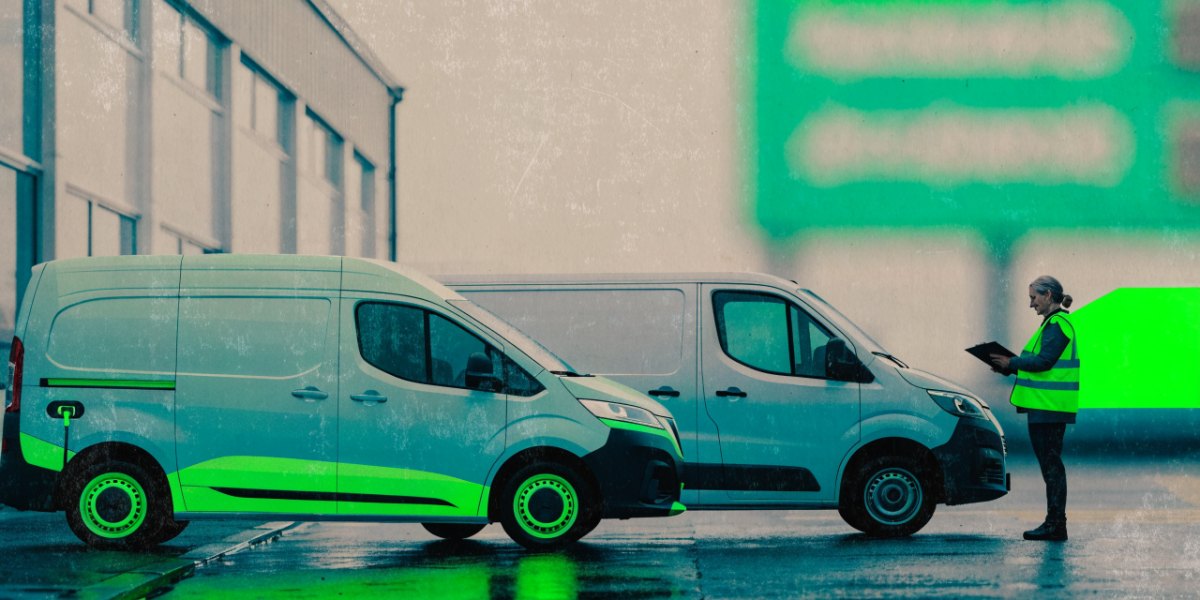
THRIVE's electric van break-even stood at 8,566 miles a year in the week commencing 26 October. That is the annual mileage at which the median post-grant price premium of a medium electric van is repaid by fuel savings over four years. On 20 July the same measure was 11,538 miles, so the threshold has fallen by 25.8%.
For fleets with renewals coming up, the change is concrete. On THRIVE's measure, a medium van at median prices covering between 8,566 and 11,538 miles a year has crossed the break-even line since July on THRIVE's VAT-inclusive fuel basis. The main cause is diesel. The UK average pump price was 199.2p a litre in the week of 26 October, against 167.1p in the week commencing 20 July.
Diesel did most of the work on the threshold
The break-even is a simple division. It takes the median list-price gap between matched electric and diesel medium vans, after the grant, spread over four years, and divides it by the fuel saving per mile (THRIVE's break-even page sets out the method). When diesel rises, the saving per mile grows and the mileage needed to recover the gap shrinks. One basis matters before using it: the list prices exclude VAT while pump prices include it, so a business that reclaims VAT on fuel saves less per mile than this measure assumes and has a higher threshold.
That is what the series shows. Diesel rose 32.1p a litre between 20 July and 26 October, an increase of 19.2%. Over the same weeks THRIVE's Fleet Cost Index rose from 2.24 to 2.68. The index measures how many times more a diesel van costs to fuel per mile than an electric van costs to charge. Its rise is 19.6%. A diesel van now costs 25.2p a mile in fuel on the index's assumptions.
The break-even fell hardest in late July and mid-September, the weeks when pump prices climbed fastest. It reached its low of 8,512 miles in the week of 12 October, when diesel peaked at 200.0p. It has since edged back to 8,566 miles as diesel eased to 199.2p. THRIVE's reading is that the threshold now tracks the pump price closely: other inputs unchanged, any easing in diesel would lift it again.
Medium electric van break-even mileage Annual miles to recover the post-grant price gap over four years, by weekShow the figures as a table
week miles 2026-07-20 11,538 2026-07-27 10,740 2026-08-03 10,204 2026-08-10 9,941 2026-08-17 9,897 2026-08-24 9,861 2026-08-31 9,804 2026-09-07 9,554 2026-09-14 9,196 2026-09-21 8,829 2026-09-28 8,682 2026-10-05 8,544 2026-10-12 8,512 2026-10-19 8,561 2026-10-26 8,566
The diesel series explains the shape. Pump prices rose sharply in late July and again in September, peaked at 200.0p in mid-October, and have eased slightly since.
UK average diesel pump price Pence per litre, DESNZ weekly road fuel prices, week commencingShow the figures as a table
week diesel 2026-07-20 167.08 2026-07-27 173.97 2026-08-03 179.19 2026-08-10 181.97 2026-08-17 182.45 2026-08-24 182.82 2026-08-31 183.49 2026-09-07 186.36 2026-09-14 190.72 2026-09-21 195.53 2026-09-28 197.58 2026-10-05 199.52 2026-10-12 200.04 2026-10-19 199.33 2026-10-26 199.22
A three-band rule for medium van renewals
The series' own range gives a practical way to sort a medium van fleet at renewal. Use each van's actual annual mileage, not the fleet average.
- Above 11,538 miles a year: the fuel case for electric held on this measure even at July's VAT-inclusive diesel price of 167.1p, though it would weaken if diesel fell below that. These vans have the strongest fuel case on this measure and are the natural first candidates to price up, subject to whole-life costs and charging.
- Between 8,566 and 11,538 miles a year: at median prices, these vans have moved into the money only since July. The sums work at today's VAT-inclusive diesel price but did not at July's. For a business that reclaims VAT on fuel the threshold is materially higher, so much or all of this band may not yet clear the line; rerun the sum on ex-VAT fuel and charging costs. The sensible move is to price these vans up where charging is settled, testing the decision against a lower diesel price and your own VAT position.
- Below 8,566 miles a year: on median prices, the fuel saving does not repay the post-grant premium inside four years. Electric may still be right for other reasons, such as clean air zone access or a longer holding period, but those sit outside this calculation and need their own case.
The rule uses a median gap, so many matched pairs will carry a bigger price gap than the break-even assumes. Electric medium van list prices in THRIVE's van database, which covers 28 versions that publish a price, run from £28,000 to £48,775, with a median of £42,383. Electric list prices alone span £20,775 within the class, so the gap on your own quotes may differ widely from the median. Run the electric and diesel quotes you are actually offered through the same sum. The van listings give the starting list prices.
Large vans sit outside the break-even
THRIVE's break-even covers medium vans only, so it should not be applied to a large van fleet. Large electric vans in the database have a median list price of £50,803 across 29 versions, ranging from £42,500 to £58,850. That median is £8,420 above the medium median, or 1.20 times as much.
Grant eligibility follows gross vehicle weight, not THRIVE's van classes: some vans between 2,500kg and 4,250kg gross vehicle weight that meet the emissions and range rules can qualify for up to £5,000, whatever THRIVE's class. Some small vans under 2,500kg can qualify for up to £2,500. GOV.UK also says some vans can be sold at a 35% discount [S1], and gives maximum discounts of £2,500 for some small vans and £5,000 for some large vans. THRIVE has not published a large van figure. Fleets should work from matched quotes and check each van's gross vehicle weight, because the grant band follows weight, not body size.
Charging mix can outweigh the pump price
The index assumes an electric van charges 70% at home and 30% on public chargers, priced at HMRC's advisory electric rates for company cars, used as a proxy because there is no official electric-van rate. A fleet whose real consumption or charging pattern differs will have a different break-even, and charging prices vary widely. Zapmap's September average for rapid and ultra-rapid public charging was 79.0p per kWh, and for slow and fast public charging 54.0p. Business electricity in DESNZ's Q2 2026 figures ranged from 25.2p per kWh in the medium band, which covers users of up to 19,999 MWh a year, through 28.6p in the small band to 38.4p in the very small band of up to 20 MWh. The Ofgem household cap has been 26.3p per kWh since 1 October. These figures are not on one basis: the DESNZ rates include the climate change levy and exclude VAT, THRIVE's tables do not state the VAT basis of the Zapmap and Ofgem figures, and the periods differ. The medium band also covers sites far larger than a typical van depot. THRIVE's charging cost tables hold each rate with its source.
Vans that charge on public rapid chargers more than the index's 30% public share, at around 79.0p per kWh, will need more miles to break even. Depot charging can lower the figure, but only where the business tariff beats the rates the index assumes; small sites on very small-band tariffs may not. The government has said its Depot Charging Scheme could cover up to 70% of installation costs, with savings of up to £1 million, after a £170 million boost; check it is open to your site before relying on it [S10].
Lock the grant at order, not at delivery
The government confirmed on 25 March 2026 that "The van grant will continue to offer discounts of up to £5,000 off the cost of electric vans.". It presented the grants partly as a hedge: "these grants will support industry to switch to electric, helping to reduce exposure to fuel price uncertainty.". THRIVE's fleet calendar holds no dated grant changes. Even so, the portal rules reward ordering early.
- OZEV guidance says that "Any order placed on the system for a specific customer is guaranteed the grant at the level advertised at the time the order was placed on the grant portal." [S15].
- The van must be registered and delivered within 12 months of the order. OZEV says that window "is a temporary extension" and reserves the right to change it.
- "Grants must be claimed before registration.". Claims older than three months are not considered.
- Each business may receive up to 1,500 van grants each financial year, and orders over the limit are cancelled. Fleets that may order more than 1,500 grant-funded vans in a financial year should phase orders across financial years.
Where the break-even figure could mislead
The break-even counts list price, grant and fuel only. It leaves out lease rates, residual values, maintenance and insurance, any of which can move a real decision. List prices in the database exclude VAT while pump prices include it, which is why a business that reclaims VAT on fuel should expect a higher threshold.
The fuel input is THRIVE's weekly pump price table, built from DESNZ's weekly road fuel prices. Its latest row is the week commencing 26 October. Fuel duty and the van grant are both set by government, so a change to either would move the break-even, as would a revision to HMRC's advisory electric rates; THRIVE recalculates it every week on its break-even page.
Read the break-even as a screening line for medium vans, not a verdict on each van. Vans well above the top band have the strongest fuel case; confirm it with whole-life costs before ordering. Vans in the middle band need the decision tested against cheaper diesel and your real charging mix before the order goes on the portal.
Questions fleets are asking
At what annual mileage does an electric van pay back against diesel?
On THRIVE's measure for medium vans at median prices, 8,566 miles a year in the week commencing 26 October, over four years after the grant. It sets VAT-free list prices against pump prices that include VAT, so a business that reclaims VAT on fuel will have a higher threshold; your own figure also depends on your quotes, charging mix and whole-life costs.
Why has the break-even fallen so far?
Mainly diesel. The pump price rose from 167.1p to 199.2p a litre between 20 July and 26 October, raising the fuel saving per mile. THRIVE's Fleet Cost Index rose 19.6% over the same weeks.
Does the figure apply to large vans?
No. The break-even covers medium vans only. Large electric vans carry a higher median list price of £50,803. Grant eligibility is set by gross vehicle weight, not van class: some vans between 2,500kg and 4,250kg that meet the emissions and range rules can qualify for up to £5,000.
When should I order to secure the grant?
The grant is guaranteed at the level advertised when the order is placed on the portal, provided the van is registered and delivered within 12 months. OZEV says that window is temporary.
How we did this
This is a THRIVE Intelligence analysis. Every figure in it comes from one of the documents or THRIVE datasets below; calculations were made in code from those figures, and the article was checked against them before publication.
Primary documents
THRIVE data
- THRIVE electric van break-even, as of 26 October 2026. THRIVE's van break-even: the median list-price gap of matched electric and diesel medium vans, after the van grant, over four years, divided by the fuel saving per mile from the Fleet Cost Index. A screening figure on median prices, not a figure for any one van. List prices exclude VAT while pump prices include it, so a business that reclaims VAT on fuel saves less per mile than this assumes and has a higher threshold. Fuel only: lease rates, residual values, maintenance and insurance are not in it.
- UK pump prices (DESNZ), THRIVE fuel data, as of 26 October 2026. UK average pump prices including duty and VAT, from the Department for Energy Security and Net Zero's weekly road fuel prices, keyed by week commencing Monday; the latest row was read from the DESNZ release on 2026-10-27.
- THRIVE Fleet Cost Index, as of 26 October 2026. THRIVE's Fleet Cost Index: diesel van fuel cost per mile (DESNZ weekly pump prices, which include duty and VAT) divided by an electric van's charging cost per mile (HMRC advisory electric rates for company cars, used as a proxy because there is no official electric-van rate; 70% home and 30% public), week commencing.
- THRIVE van database: specification spread, as of 27 October 2026. The list price excluding VAT (£) of van versions on sale in THRIVE's van database that publish one, from the makers' own specifications.
- THRIVE van database: specification spread, as of 27 October 2026. The list price excluding VAT (£) of van versions on sale in THRIVE's van database that publish one, from the makers' own specifications.
- THRIVE charging cost data, as of 1 October 2026. Electricity prices for charging as held in THRIVE's data tables, each from the source named on the THRIVE data page.
- THRIVE fleet dates calendar, as of 27 October 2026. Fleet dates on file in THRIVE's calendar, each with the source that set it.
How THRIVE sources and checks its stories · Corrections, and how to report an error
Euro 7 confirmed: all new cars and vans must comply from 29 November 2027
UK van registrations rise 4.8% in September as electric van uptake hits record but stays below ZEV Mandate target
Ayvens targets 10% LCV leasing growth by 2029
The Tuesday briefing
The week's fleet numbers and news, every Tuesday morning. Free.
One email a week. Unsubscribe in a click.
Named in this story? You have a right of reply: email hello@thrivefleet.co.uk and a challenged claim will be marked under review while we check it.
Got a story, or a question about this one? Contact the newsroom. We read everything that comes in. With the volume of fleet news, not everything can run, but a story with a number, a date or a decision in it stands a good chance.