

Euro 7 confirmed: all new cars and vans must comply from 29 November 2027
Every new car and van registered in Great Britain from 29 November 2027 must meet the Euro 7 emission standard, the government confirmed on 27 October 2026. The earlier date for new models is dropped, electric vans are covered by new brake and battery rules, and truck, bus and coach dates will follow the EU after a further consultation.
The government has confirmed that Great Britain will adopt the Euro 7 emission standard, and every new car and van registered on or after 29 November 2027 will have to meet it. The Department for Transport published the decision on 27 October 2026 in its response to the April consultation, which drew 67 responses, eight of them from fleet operators and operations trade bodies.
The main change from the April proposal is a date that has gone. The DfT had proposed following the EU's earlier deadline of 29 November 2026 for brand-new vehicle types. A number of manufacturers said that would leave too little time to update model lines and would not fit their product planning, so the government will not write a separate new-types date into GB law. The all-registrations date of 29 November 2027 stays, as does 1 July 2030 for small volume manufacturers, which the DfT now defines as those registering fewer than 2,500 cars or vans a year in Great Britain.
Euro 7 at a glance
- 29 November 2027: every new car and van registered in Great Britain must meet Euro 7. Under the April proposal, the last day to register a Euro 6d or Euro 6e car or van is 28 November 2027.
- No separate GB date for new models: the EU's 29 November 2026 date for new vehicle types does not apply in Great Britain.
- 1 July 2030: the date for small volume manufacturers of cars and vans.
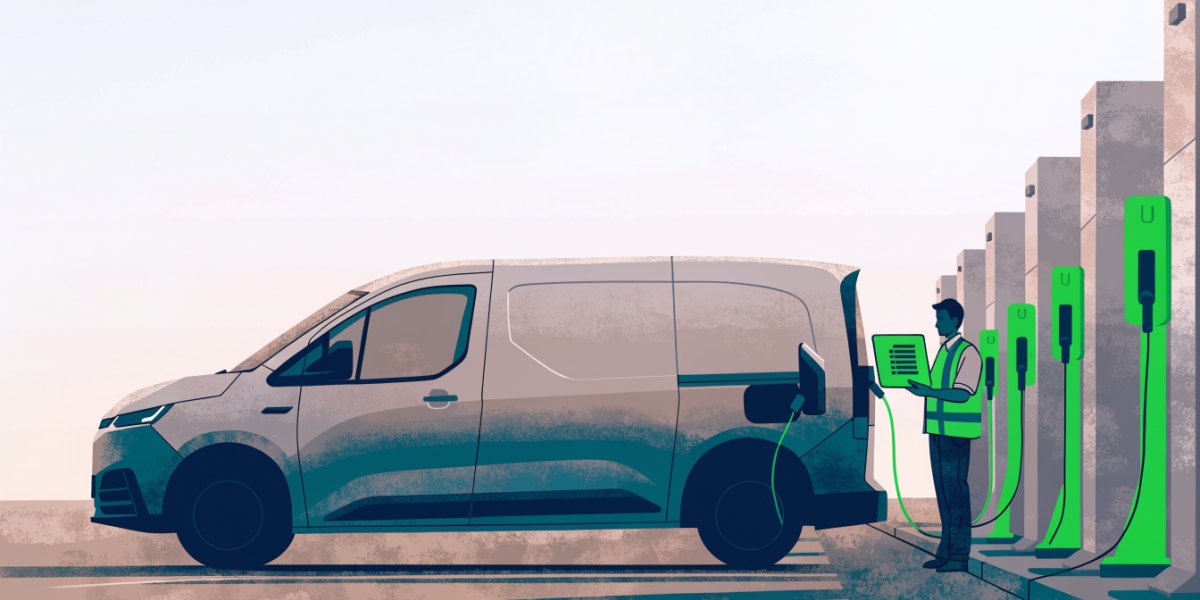
- Electric vehicles are covered: Euro 7 adds limits on brake and tyre particles, battery durability rules and a battery health monitor.
- Trucks, buses and coaches wait: their dates go to a further consultation, and any EU delay will be mirrored in Great Britain.
What is Euro 7, and what changes?
Euro 7 is the EU's newest vehicle emission standard, set by Regulation (EU) 2024/1257. It replaces Euro 6 for cars and vans and Euro VI for trucks, buses and coaches. Great Britain still applies Euro 6d and Euro VI Step D, the standards in force when the UK left the EU, while Northern Ireland already follows the later Euro 6e and Euro VI Step E under the Windsor Framework. Euro 7 includes those later steps, so the government is not mandating them separately.
For cars and vans, the exhaust pollutant limits other than particle number stay at Euro 6e levels. The new material is elsewhere:
- Brake and tyre particles. For the first time, an emission standard limits particulate matter from brake wear and tyre abrasion. The UK's National Atmospheric Emissions Inventory estimates that brakes and tyres are now the dominant source of particulate emissions from road transport. These rules do not depend on an exhaust, so they reach electric vehicles too.
- Smaller particles counted. Particle number limits move from the PN23 scale to PN10, so finer particles are regulated.
- Longer durability. Emissions must stay under control over a longer lifespan than Euro 6 required.
- Battery durability and health. Electric vehicles and plug-in hybrids must meet minimum capacity-retention thresholds over defined mileage and time periods, and carry a battery health monitor that is accurate, accessible and comparable.
- On-board monitoring. Vehicles must monitor their exhaust emissions in real time and can warn the driver when emissions control repairs are needed.
- Anti-tampering. Manufacturers must protect emissions control and engine management systems against manipulation.
Euro 7 also brings in the Euro 6e changes that Great Britain skipped. Two matter to fleets. On-board fuel consumption monitoring, already required on cars and on vans up to 3.5 tonnes, extends to vans and goods vehicles between 3.5 and 12 tonnes. And the official CO2 figures for plug-in hybrids are recalculated, which bears on company car tax (below).
For heavy-duty vehicles, Euro 7 tightens limits on nitrogen oxides, particulate matter, carbon monoxide, ammonia and non-methane hydrocarbons, and adds a new limit for nitrous oxide. None of that is being legislated for Great Britain yet.
The Euro 7 dates for Great Britain
| What | Date | Status |
|---|---|---|
| New car and van types (EU) | 29 November 2026 | EU only, not mandated in Great Britain |
| All new car and van registrations | 29 November 2027 | Confirmed, 27 October 2026 |
| Car tyres (C1) abrasion limits | 1 July 2028 | Proposed, follows the EU |
| New truck, bus and coach types | 29 May 2028 | Proposed, further consultation to follow |
| All new truck, bus and coach registrations | 29 May 2029 | Proposed, further consultation to follow |
| Van tyres (C2) abrasion limits | 1 April 2030 | Proposed, follows the EU |
| Cars and vans, small volume manufacturers | 1 July 2030 | Confirmed, 27 October 2026 |
| Trucks, buses and coaches, small volume manufacturers | 1 July 2031 | Proposed |
| Truck, bus and coach tyres (C3) abrasion limits | 1 April 2032 | Proposed, follows the EU |
The government's response confirms the car and van registration dates. The truck, bus, coach and tyre dates are those proposed in April, which follow the EU's timetable.
The heavy-duty dates are the ones to treat with caution. The government says any delay that comes out of the EU's automotive omnibus negotiations will be mirrored in Great Britain. On 20 October, the European manufacturers' association ACEA wrote to MEPs asking for a two-year postponement of the heavy-duty Euro 7 dates and a five-year postponement of the heavy-duty brake emission requirements, arguing that test procedures and compliance methods are not finished. The European Parliament's plenary vote on the package is planned for November, electrive reported. Until that settles, a 2028 start for new truck types is a proposal, not a plan.
The timetable lands as the truck market recovers: SMMT figures showed new HGV registrations returning to growth in the third quarter, while zero-emission trucks fell to 1.1% of the market. THRIVE follows both in its electric HGVs and zero-emission trucks coverage.
What THRIVE's data shows
Euro 7 applies to vehicles when they are first registered, so the van line-up on sale today is the one manufacturers must bring into line by 29 November 2027. THRIVE tracks 220 van and pickup versions on sale or open for order in the UK in its van database. Of those, 123 (56%) have a combustion engine: 107 diesel, 13 plug-in hybrid or range-extended and 3 petrol. Their successors registered from that date must meet Euro 7's exhaust rules as well as the new brake, durability and monitoring rules; the 97 electric versions face the brake, battery and monitor rules.
The van line-up Euro 7 will reshape
Van and pickup versions on sale or open for order, by size and powertrain, 27 October 2026
- Electric
- Plug-in hybrid or range-extended
- Petrol
- Diesel
Show the figures as a table
| Class | Electric | Plug-in hybrid or range-extended | Petrol | Diesel | Total |
|---|---|---|---|---|---|
| Small vans | 28 | 6 | 3 | 19 | 56 |
| Medium vans | 35 | 5 | 0 | 30 | 70 |
| Large vans | 30 | 0 | 0 | 51 | 81 |
| Pickups | 4 | 2 | 0 | 7 | 13 |
| All | 97 | 13 | 3 | 107 | 220 |
Large vans lean hardest on diesel: 51 of the 81 large van versions on sale are diesel. Large panel vans are also a common base for conversions, where the consultation found the deepest worries about the change (below). And 13 of the 55 model families THRIVE tracks have no electric version on sale, five of them pickups.
The running-cost case is moving one way. THRIVE's Fleet Cost Index puts the cost of fuelling a diesel van at 2.68 times that of charging an electric one per mile in the week commencing 26 October 2026, up from 2.24 in the week of 20 July. Over the same weeks, the mileage at which an electric van repays its price premium over a diesel has fallen from 11,538 to 8,566 miles a year. Both are updated every week.
Diesel against electric, per mile
How many times more a diesel van costs to fuel per mile. Latest 2.68×
Electric van break-even
Miles a year for an electric van to repay its premium. Latest 8,566
Show the figures as a table
| Week commencing | Fleet Cost Index | Break-even miles a year |
|---|---|---|
| 20 Jul | 2.24× | 11,538 |
| 27 Jul | 2.34× | 10,740 |
| 3 Aug | 2.41× | 10,204 |
| 10 Aug | 2.44× | 9,941 |
| 17 Aug | 2.45× | 9,897 |
| 24 Aug | 2.46× | 9,861 |
| 31 Aug | 2.46× | 9,804 |
| 7 Sept | 2.50× | 9,554 |
| 14 Sept | 2.56× | 9,196 |
| 21 Sept | 2.63× | 8,829 |
| 28 Sept | 2.65× | 8,682 |
| 5 Oct | 2.68× | 8,544 |
| 12 Oct | 2.69× | 8,512 |
| 19 Oct | 2.68× | 8,561 |
| 26 Oct | 2.68× | 8,566 |
What Euro 7 means for fleets
Ordering cars and vans for late 2027
The April consultation set 28 November 2027 as the last registration date for cars and vans approved to Euro 6d or Euro 6e. A Euro 6 vehicle still unregistered after that could only be registered under an end-of-series derogation, which lets manufacturers sell a limited number of vehicles built to the old standard. Manufacturers asked for one and said early clarity mattered for product planning. The response does not say whether one will be offered.
Fleets with long-lead orders, vehicles going through conversion or bulk registrations planned for late 2027 should ask suppliers now what happens to Euro 6 stock that misses the deadline. The van comparison tool puts price, payload, load space and range side by side for every version in the database.
Converted and special purpose vehicles
Multi-stage vehicles, where a base vehicle is converted for another job such as a van turned into a motorhome, and special purpose vehicles such as ambulances and hearses were a recurring concern. Respondents said converters rely on a steady supply of base vehicles from larger manufacturers, and that the problems Euro 7 could cause in conversion may not be known until those vehicles reach the market.
The government will mandate Euro 7 only for vehicles built in unlimited series at this stage. It will not be required under the GB small series, GB medium series or individual vehicle approval schemes, though manufacturers using them can choose EU Euro 7 approvals instead. The DfT says it will work further with multi-stage and special purpose vehicle makers while it drafts the legislation. For more on the van market, see THRIVE's vans and light commercial vehicles coverage.
Servicing, brakes and tyres
Fleet operators told the DfT that Euro 7-compliant brakes and tyres could cost more, and several said higher servicing costs would ultimately be passed on. On brakes, the government's intention is that replacement brakes fitted to Euro 7 vehicles will not at first have to meet the new brake wear limits. Extra time will be given after a new UN regulation on replacement brake parts is adopted, and the DfT will work out a timetable with the aftermarket over the coming months. Under the April timetable, abrasion limits for van tyres do not apply until 1 April 2030.
Independent repairers asked for compatibility data on replacement brake parts, real-time access to on-board monitoring data, and anti-tampering rules that do not lock them out. The response records those concerns but makes no commitment on them. THRIVE tracks whole-life costs in its fleet running costs coverage.
Battery health and used EV values
The battery health monitor is the part of Euro 7 most likely to help fleets directly. From 29 November 2027, new electric cars and vans and new plug-in hybrids from mainstream manufacturers will carry a standardised reading of battery health, which the DfT says will support buyers of used EVs. For leasing companies and remarketing teams, that is a comparable figure in place of a seller's assurance. Respondents asked for battery checks at the MOT and over-the-air access to battery data for third parties; neither is part of this decision.
The used EV market is already growing: SMMT figures showed used battery electric car sales up 67% in the second quarter, and CAP HPI now forecasts van residual values up to four years ahead. Of the 97 electric van and pickup versions on sale in the THRIVE database, the 90 with a published WLTP range cover 139 to 374 miles, a median of 196, and the 65 with a published usable battery capacity carry 44 kWh to 97.8 kWh. See the electric vans with more than 200 miles of range.
Plug-in hybrids and company car tax
Euro 6e and Euro 7 recalculate official CO2 figures for plug-in hybrids to close the gap with real-world use: the DfT says real-world PHEV emissions are almost 2.5 times the test-cycle figure. Higher official figures can push a PHEV company car into a higher benefit-in-kind band. The government's benefit-in-kind easement for PHEVs, which applies UK-wide retrospectively from January 2025 to April 2028, will also cover Euro 7 vehicles. Current bands are on THRIVE's company car tax tables.
For manufacturers, the Vehicle Emissions Trading Schemes Order behind the ZEV mandate will be amended to bring Euro 7 vehicles in, and makers can keep using PHEV CO2 values calculated under Euro 6d for the non-ZEV CO2 scheme until 2030. The mandate itself is under review: the SMMT called for reform as the government's consultation neared its close.
Large vans approved as heavy-duty vehicles
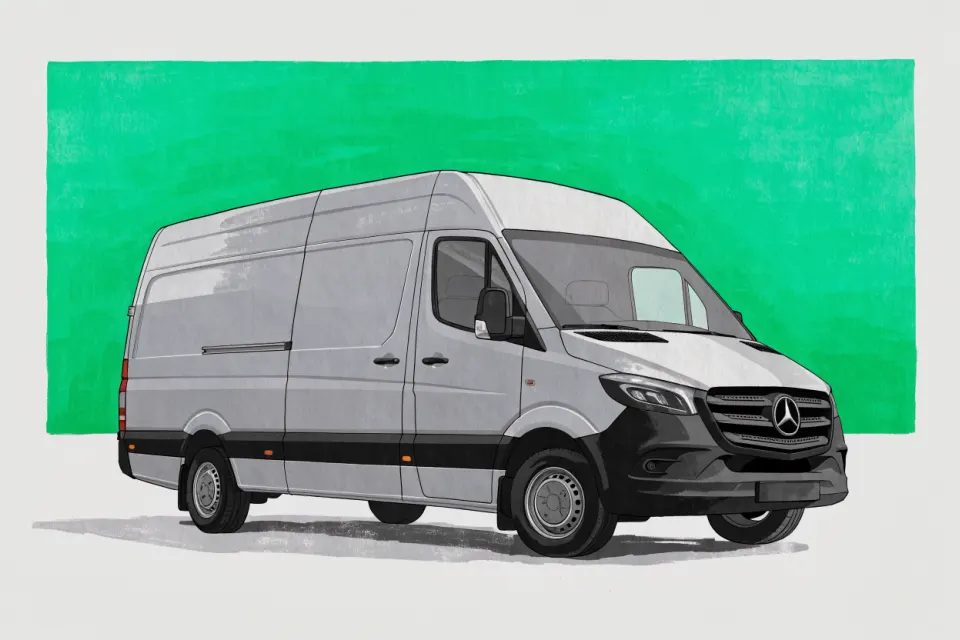
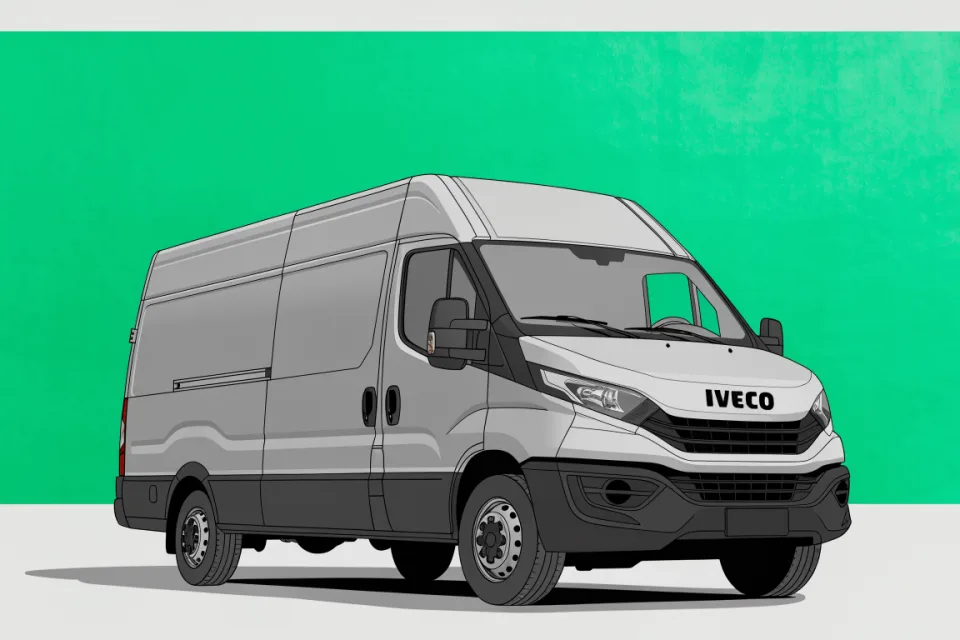
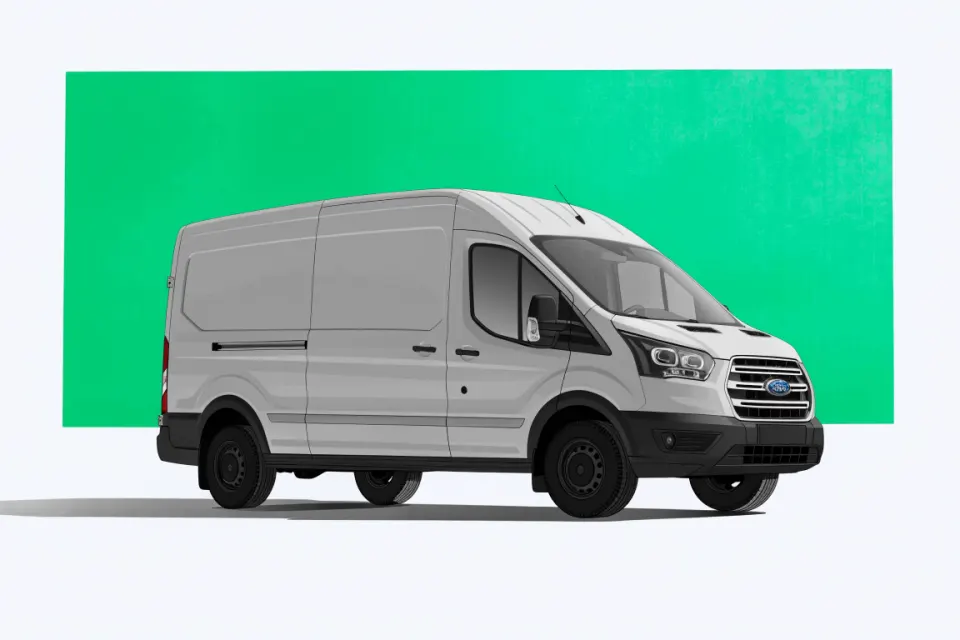
Some larger N1 goods vehicles are currently approved under the heavy-duty Euro VI rules. Under Euro 7 they move to the light-duty requirements and the light-duty dates, and could come into the scope of the vehicle emissions trading schemes for the first time. Respondents warned of a significant burden, and the government says it will consider this carefully when it amends the order. Operators running the largest 3.5-tonne vans, the class of the Mercedes-Benz Sprinter, Iveco Daily, Ford Transit and Volkswagen Crafter, should ask their supplier which approval the version they order is built to.
What the industry told the government
Most organisations backed the move. Among organisations other than manufacturers, 30 of 38 agreed with adopting Euro 7 for cars and vans, and the same number for trucks, buses and coaches. Twelve of 15 vehicle manufacturers agreed for cars and vans. Supporters argued that matching the EU and Northern Ireland avoids duplicate testing and gives certainty for investment. Private individuals were the main opposing group, with 10 of 14 disagreeing on cars and vans, citing cost and repairability and arguing that Euro 7 conflicts with the zero emission vehicle mandate. A small number of fleet operators questioned whether the sector was ready.
The dates divided opinion more. Among organisations other than manufacturers, 22 agreed and 8 disagreed, while manufacturers split 7 in favour and 8 against. Around half of the manufacturers backed Euro 7 but found the new-types date for cars and vans too tight, and that is the objection the government accepted.
What is still undecided
- Dates for trucks, buses and coaches, and the definition of a small volume manufacturer for them, which go to a further consultation with no date given.
- Whether an end-of-series derogation will let Euro 6 cars and vans be registered after 28 November 2027.
- Whether manufacturers must keep collecting and retaining on-board monitoring data before there is a defined use for it, which some respondents asked to be dropped.
- When replacement brakes will have to meet the brake wear limits, which waits on a UN regulation.
- How large vans moving from heavy-duty to light-duty rules will be treated under the vehicle emissions trading schemes.
What happens next
The DfT will lay a statutory instrument under the Product Regulation and Metrology Act 2025 to set the 29 November 2027 date. Euro 7 will be put into effect by accepting EU and equivalent UN type approvals, so no GB-specific testing is needed and one specification of vehicle can be sold across the UK. Until the instrument is in force, the Vehicle Certification Agency cannot accept EU Euro 7 approvals, or the temporary Euro 7-TEMP approvals, for GB whole vehicle type approval. In the meantime the DfT is pointing manufacturers to approvals under UN regulations such as R83.09, R154.04 and R168.01.
In-service conformity testing of Euro 6 vehicles will also be scaled back to a proportionate, risk-based programme that prioritises vehicle families unlikely to be tested in the EU. THRIVE will report when the statutory instrument is laid and when the heavy-duty consultation opens.
Euro 7: questions fleets are asking
When does Euro 7 come in for cars and vans in the UK?
Every new car and van registered in Great Britain from 29 November 2027 must meet Euro 7, and small volume manufacturers have until 1 July 2030. Northern Ireland follows the EU, whose date for all new car and van registrations is the same 29 November 2027.
Does Euro 7 apply to electric vans?
Yes. Electric vans are covered by the brake particle limits, the battery durability rules and the battery health monitor. Tyre abrasion limits apply to the tyres themselves, from 1 April 2030 for van tyres under the April timetable.
Can a Euro 6 van be registered after November 2027?
Only if the government allows an end-of-series derogation. The April consultation set 28 November 2027 as the last registration date for Euro 6d and Euro 6e cars and vans, and the response has not said whether a derogation will be offered.
Will Euro 7 change company car tax?
It can for plug-in hybrids. Recalculated official CO2 figures could raise their benefit-in-kind, but the easement that applies from January 2025 to April 2028 also covers Euro 7 vehicles.
When does Euro 7 apply to trucks, buses and coaches?
That is not yet decided for Great Britain. The EU dates are 29 May 2028 for new types and 29 May 2029 for all registrations, but the government will consult again and mirror any EU delay, and manufacturers have asked the EU for two more years.
Does Euro 7 affect vehicles already on the road?
No. It sets the standard new vehicles must meet when they are first registered.
Sources
Department for Transport: government responseDepartment for Transport: consultation, April 2026Regulation (EU) 2024/1257 (EUR-Lex)ACEAelectriveNational Atmospheric Emissions InventoryHow THRIVE sources and checks its stories · Corrections, and how to report an error
THRIVE's medium electric van break-even is down 25.8% since July to 8,566 miles a year
UK van registrations rise 4.8% in September as electric van uptake hits record but stays below ZEV Mandate target
Ayvens targets 10% LCV leasing growth by 2029
The Tuesday briefing
The week's fleet numbers and news, every Tuesday morning. Free.
One email a week. Unsubscribe in a click.
Named in this story? You have a right of reply: email hello@thrivefleet.co.uk and a challenged claim will be marked under review while we check it.
Got a story, or a question about this one? Contact the newsroom. We read everything that comes in. With the volume of fleet news, not everything can run, but a story with a number, a date or a decision in it stands a good chance.