

THRIVE Intelligence · Analysis
Company van tax 2027/28: the £4,310 van benefit charge, and why electric vans still pay nothing
The van benefit charge rises to £4,310 and the van fuel benefit to £825 from 6 April 2027. A higher-rate taxpayer with a diesel van and private fuel will pay £2,054, and their employer £770.25. An electric van is still taxed at nothing, and from April the tax moves into payroll.
Electric van buying guide for fleets
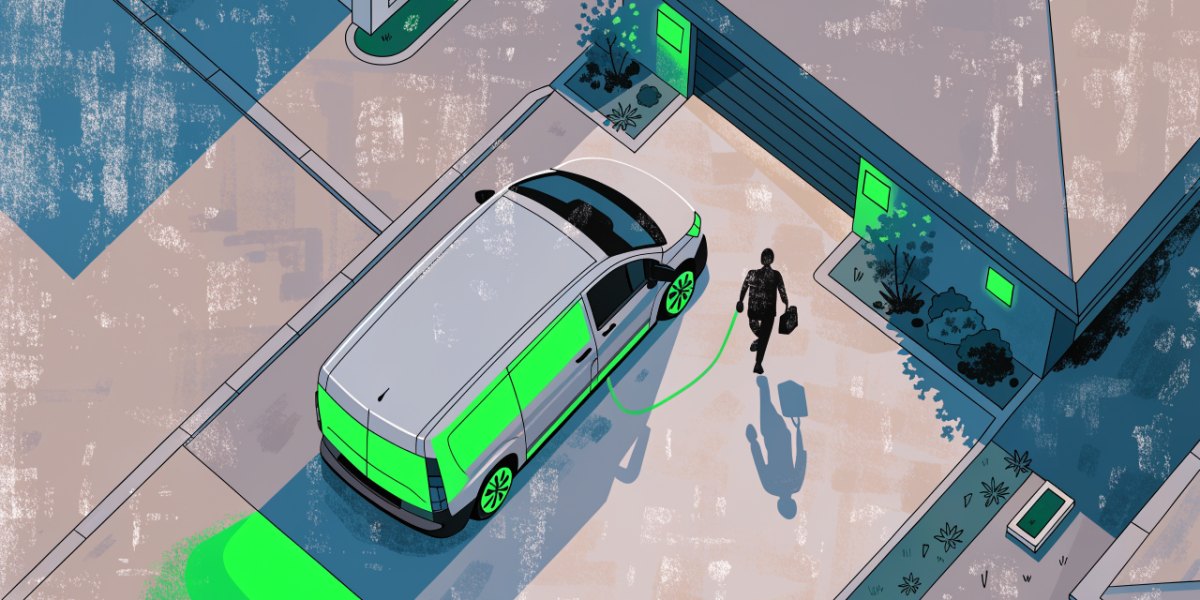
An employee who can use a company van privately will be taxed on a flat £4,310 of benefit in 2027/28, up from £4,170, the government confirmed in the Budget on 28 October 2026. If the employer also pays for private fuel, a further £825 is added. Both charges have risen with inflation, as they do most years. The changes that matter more in 2027/28 are elsewhere: the way the tax is collected moves into payroll from April 2027, and an electric van is still taxed at nothing.
A basic-rate taxpayer with a diesel van and private fuel will pay £1,027 in 2027/28, and a higher-rate taxpayer £2,054. Their employer pays Class 1A National Insurance of £770.25 on top. The same driver in an electric van pays nothing, and so does the employer.
Company van tax 2027/28 at a glance
- Van benefit charge: £4,310 (2026/27: £4,170). Uprated by September's inflation figure.
- Van fuel benefit charge: £825 (2026/27: £798), only if the employer pays for private fuel.
- Electric and other zero-emission vans: nil for both charges.
- Commuting only: nil, if the van is mainly for business and private use is limited to the journey to work.
- From 6 April 2027: employers must tax company vans and van fuel through payroll, not on a P11D after the year ends (subject to the Finance Bill 2026-27).
- Van road tax: £375 a year from 1 April 2027 for most vans, electric vans included.
- Vans plated above 3,500kg: not vans for this tax, so the nil rate for electric vans does not apply to 4,250kg electric vans. See what counts as a van.
How company van tax works
A company van is not taxed like a company car. A car's taxable value is a percentage of its list price, set by its CO2 emissions. A van's is a single flat amount, whatever the van cost, how old it is or what it emits, as long as it can emit CO2 at all. HMRC calls this the van benefit charge. For 2027/28 it is £4,310.
The employee pays income tax on that amount at their own rate. The employer pays Class 1A National Insurance on it, at 15%. Nothing is charged unless the van is actually used privately; HMRC's manual says that, unlike a car, "there must be some actual private use before the van benefit charge is incurred".
| 2027/28 | Basic rate (20%) | Higher rate (40%) | Additional rate (45%) | Employer Class 1A (15%) |
|---|---|---|---|---|
| Van only (taxable value £4,310) | £862 | £1,724 | £1,939.50 | £646.50 |
| Van and private fuel (£5,135) | £1,027 | £2,054 | £2,310.75 | £770.25 |
| Zero-emission van, with or without private charging | £0 | £0 | £0 | £0 |
| Commuting only (restricted private use condition met) | £0 | £0 | £0 | £0 |
Where the employer provides fuel for private journeys and the employee does not pay all of it back, the van fuel benefit charge of £825 is added. An employee can avoid it by repaying the full cost of private fuel by 6 July after the end of the tax year. Partial repayments do not reduce it: the fuel charge is all or nothing.
The rates for 2027/28, and how they are set
The figures are in the Budget's overview of tax legislation and rates. The government says it will increase the van benefit charge and the car and van fuel benefit charges in line with the September Consumer Prices Index, which the same document gives as 3.5%, and that the new rates come into effect from 6 April 2027. The increase is made by statutory instrument, which the government says it will introduce later this year; it had not been made when this article was written.
| Tax year | Van benefit charge | Van fuel benefit charge | Higher-rate tax, van and fuel |
|---|---|---|---|
| 2025/26 | £4,020 | £769 | £1,915.60 |
| 2026/27 | £4,170 | £798 | £1,987.20 |
| 2027/28 | £4,310 | £825 | £2,054.00 |
The rise for 2027/28 is £140, or 3.4%: the 3.5% inflation figure, rounded down to the nearest £10. For a higher-rate taxpayer with a van and fuel it adds £66.80 to the year's tax bill. Over a longer run the increases add up. The charge was £3,000 for seven years to 2013/14, and has risen in most years since. It is 39.5% higher in 2027/28 than in 2014/15.
The van benefit charge, 2014/15 to 2027/28
Flat taxable value of a company van with private use, £ a year (vans that can emit CO2)
Show the figures as a table
| 2014/15 | 3,090 |
|---|---|
| 2015/16 | 3,150 |
| 2016/17 | 3,170 |
| 2017/18 | 3,230 |
| 2018/19 | 3,350 |
| 2019/20 | 3,430 |
| 2020/21 | 3,490 |
| 2021/22 | 3,500 |
| 2022/23 | 3,600 |
| 2023/24 | 3,960 |
| 2024/25 | 3,960 |
| 2025/26 | 4,020 |
| 2026/27 | 4,170 |
| 2027/28 | 4,310 |
Electric vans: still nil
A van that "cannot in any circumstances emit CO2 by being driven" has a nil van benefit charge for 2021/22 and every later year, under section 155 of the Income Tax (Earnings and Pensions) Act 2003. The van fuel benefit charge does not apply to zero-emission vans either. Nothing in Budget 2026 changes that, and no end date has been announced. Plug-in hybrid vans can emit CO2, so they pay the full charge.
The difference is large for anyone who takes a van home. A higher-rate taxpayer with a diesel van and private fuel pays £2,054 a year in 2027/28; in an electric van, nothing. For the employer the Class 1A saving is £646.50 a van a year, or £770.25 where the employer also pays for private fuel. Over four years at 2027/28 rates, the period THRIVE uses for its van break-even, that is £2,586 and £3,081 per van; the charge rises most years, so the real saving will be a little higher.
THRIVE's break-even puts the median list-price premium of a medium electric panel van over its diesel equivalent at £10,362.50 before VAT, or £5,362.50 after the £5,000 van grant. On those figures, the employer's National Insurance saving alone covers 48% of the net premium over four years for a van with private use (£2,586), and 57% where the employer also pays for private fuel (£3,081). The employee's tax saving is on top: £4,108 over four years at the basic rate and £8,216 at the higher rate. That money goes to the driver, not the business, but it is part of the case when a fleet is choosing what to offer.
THRIVE's van database lists 207 van versions on sale, not counting pickups or vans announced but not yet on sale, and 93 of them are electric. Small, medium and large electric vans are all available; the cheapest electric vans and the longest-range electric vans are ranked on THRIVE's lists.
When the charge is nil: commuting and insignificant use
Two situations take a fossil-fuelled van out of the charge altogether.
Commuting only. If the van is available to the employee mainly for business travel, and the terms on which it is provided forbid any private use other than ordinary commuting, the taxable value is nil. HMRC calls this the restricted private use condition. Both parts must hold through the year: the rule has to be in the terms, and the employee and their household have to keep to it. HMRC's manual says the business travel requirement is met when "the primary reason that the employee has the use of the van at all is because they need it for business travel in the normal course of their job".
Insignificant private use. A van that is available privately stays outside the charge if private use in the year is insignificant. HMRC's tests are strict. Use must be "insignificant in quantity in the tax year as a whole (i.e. a few days at most)", intermittent and irregular, and "very much the exception". A week's exclusive private use, HMRC says, is clearly not insignificant.
A written van policy that says which of these applies, and records how the van is actually used, is the evidence HMRC will ask for.
Shared vans, unavailable vans and payments for private use
The full charge can be reduced in three ways, applied in this order:
- Unavailability. If the van is not available to the employee for part of the year, the charge falls in proportion to the days it was unavailable.
- Sharing. Where several employees share a van, the charge is split between them "on a just and reasonable basis".
- Payments for private use. Money the employee pays the employer for private use reduces the taxable value, if it is paid before 6 July after the end of the tax year.
What changes in April 2027: tax through payroll
The biggest practical change for 2027/28 is not the rate. From 6 April 2027, subject to legislation in the Finance Bill 2026-27, employers must report company vans and van fuel through payroll and deduct the tax in real time, HMRC says in its impact note on the change. The same applies to company cars, car fuel and medical benefits. Most other benefits follow on 6 April 2028. The date was put back a year, from April 2026.
Today, most employers report benefits after the year ends on form P11D, and HMRC collects the tax by adjusting the employee's tax code. From April 2027 the tax will be worked out and deducted each pay period instead. For drivers the annual total is the same, but the deduction appears on every payslip. HMRC has said it will apply a temporary easement from penalties for certain non-deliberate inaccuracies in the first year.
For fleet managers the work is in the data. Payroll needs to know, at each pay date, which employee has which van, whether private fuel is provided and whether the van is electric. Changes of van, periods off the road and repayments for private fuel all need to reach payroll on time.
Double cab pickups are now cars
From 6 April 2025, HMRC stopped following the VAT definition of a van for benefit-in-kind purposes, and "most double cab pickups are expected to be classified as cars". A pickup taxed as a car is charged like any company car, on a percentage of its list price set by its CO2 emissions, not the flat van charge.
There is a transitional rule. An employer that bought, leased or ordered a double cab pickup before 6 April 2025 can keep treating it as a van until it is sold, the lease ends, or 5 April 2029, whichever comes first. HMRC's guidance is at EIM23151.
What counts as a van
For this tax, a van is a goods vehicle, built primarily to carry goods, with a design weight of no more than 3,500kg. The design weight is the plated gross vehicle weight. HMRC notes that people are not goods, so a minibus is not a van; and a vehicle over 3,500kg is not a van but a heavy goods vehicle. It falls outside the van rules altogether, including the nil rate for zero-emission vans, and if its private use is more than insignificant it is taxed under different rules (HMRC's manual covers them from EIM22990). That matters for the heavier electric vans plated at 4,250kg, which a car licence now covers, according to GOV.UK's guide to driving licence categories.
The other van taxes in 2027/28
- Vehicle Excise Duty. The standard rate for vans registered since March 2001 rises from £360 to £375 a year on 1 April 2027, according to the Budget's table of rates. Most electric vans have paid the standard van rate since 1 April 2025.
- Electric Vehicle Excise Duty. The pay-per-mile charge due from 1 April 2028, subject to legislation in the Finance Bill 2026-27, at 3p a mile for electric cars, applies to cars only. The government's consultation response says vans will be out of scope when it starts.
- Fuel duty. The 5p a litre cut runs until 30 June 2027. On 1 July 2027 duty on diesel rises from 52.95p to 60.59p a litre.
Questions fleets are asking
What is the van benefit charge for 2027/28?
£4,310, from 6 April 2027, for a van that can emit CO2 and is used privately beyond commuting. It was £4,170 in 2026/27.
How much tax will I pay on a company van in 2027/28?
£862 at the basic rate and £1,724 at the higher rate, outside Scotland. With private fuel paid for by your employer, £1,027 and £2,054.
Do you pay tax on an electric company van?
No. The van benefit charge and the van fuel benefit charge are both nil for a van that cannot emit CO2 when driven.
Is a company van taxable if I only drive it to and from work?
Not if the van is mainly for business travel and the terms on which it is provided forbid any other private use, and you keep to them. The taxable value is then nil.
Does my employer pay anything on my company van?
Yes: Class 1A National Insurance at 15% of the taxable value, £646.50 for the van alone and £770.25 with private fuel in 2027/28. Nothing is due on an electric van.
How we did this
This is a THRIVE Intelligence analysis. Every rate comes from HMRC, legislation or the Budget 2026 documents listed below; the tax figures were calculated in code from them.
Primary documents
- HM Treasury: Budget 2026, overview of tax legislation and rates (section 2.6, van and fuel benefit charges)
- HMRC: EIM22790, van benefit cash equivalent
- HMRC: EIM22915, van fuel benefit
- HMRC: EIM22725, what counts as a van
- HMRC: EIM22745, insignificant private use
- Income Tax (Earnings and Pensions) Act 2003, section 155
- HMRC: EIM23151, double cab pickups from 6 April 2025
- HMRC: mandatory reporting of benefits in kind through payroll from April 2027
- HMRC: rates and thresholds for employers 2026 to 2027
- HM Treasury: Budget 2026, Annex A rates and allowances (income tax, VED)
- HMRC: electric vehicle excise duty (eVED)
THRIVE data
- THRIVE van database. 207 van versions on sale, 93 of them electric, read 6 November 2026.
- THRIVE van break-even. Median list-price premium of six medium electric panel vans over their diesel equivalents, £10,362.50 before VAT, less the £5,000 van grant.
Tax = taxable value x the employee's marginal rate. Employer Class 1A = taxable value x 15%: HMRC states the 15% rate for 2026/27; the Budget's Annex A keeps the employer secondary rate at 15% for 2027/28, and Class 1A follows it. Rates for Scottish taxpayers differ.
Sources
HM Treasury: Budget 2026, overview of tax legislation and ratesHMRC: EIM22790Income Tax (Earnings and Pensions) Act 2003, s155HMRC: payrolling benefits from April 2027DfT: eVED consultation responseHow THRIVE sources and checks its stories · Corrections, and how to report an error
VED from April 2027: every car and van rate, and what fleets pay
Euro 7 confirmed: all new cars and vans must comply from 29 November 2027
Electric van charging costs: what each van costs a mile, from depot to rapid charger
The Tuesday briefing
The week's fleet numbers and news, every Tuesday morning. Free.
One email a week. Unsubscribe in a click.
Named in this story? You have a right of reply: email hello@thrivefleet.co.uk and a challenged claim will be marked under review while we check it.
Got a story, or a question about this one? Contact the newsroom. We read everything that comes in. With the volume of fleet news, not everything can run, but a story with a number, a date or a decision in it stands a good chance.