

THRIVE Intelligence · Analysis
Most economical diesel vans 2026: Kangoo and Transit Courier at 53.3 mpg, and what the gap costs a mile
THRIVE ranked every diesel van in its database with a verified official economy figure and priced the fuel. The Renault Kangoo and Ford Transit Courier lead small vans at 53.3 mpg, the Renault Trafic leads medium vans and the Renault Master large ones. In large vans the gap is worth £1,724 a year.
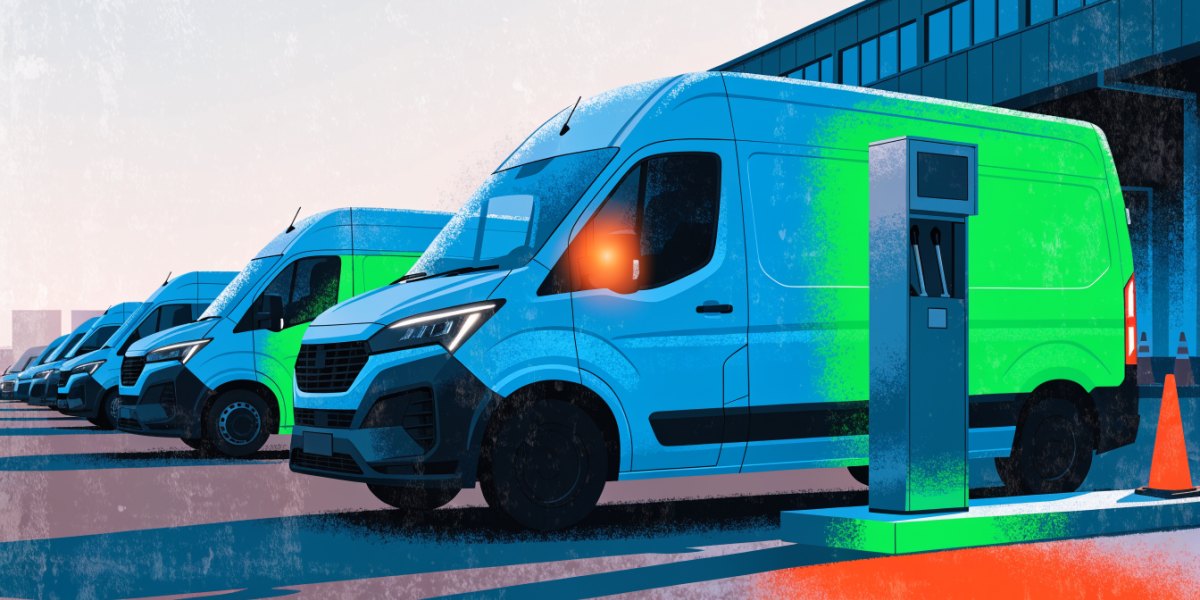
At the start of November 2026 a litre of diesel cost 198.6p at the pump, on the government's weekly average. That price turns every tenth of an mpg into money. THRIVE ranked every diesel van in its database that has a verified official fuel economy figure, then priced the fuel. In large vans, the most economical version uses £1,724 a year less diesel than the least economical one at 18,000 miles, before VAT.
The ranking comes with a finding that matters as much as the ranking itself. Makers do not publish fuel economy the same way. Some print one figure for each version; others print a range, and the range can be wide. The large vans sold by Citroën, Fiat, Peugeot and Vauxhall are listed at anywhere from 30.4 to 44.8 mpg. Read at the cautious end, as THRIVE's lists are, they sit near the bottom of their class. A van's place on any economy list depends partly on how its maker prints the number.
The short answer
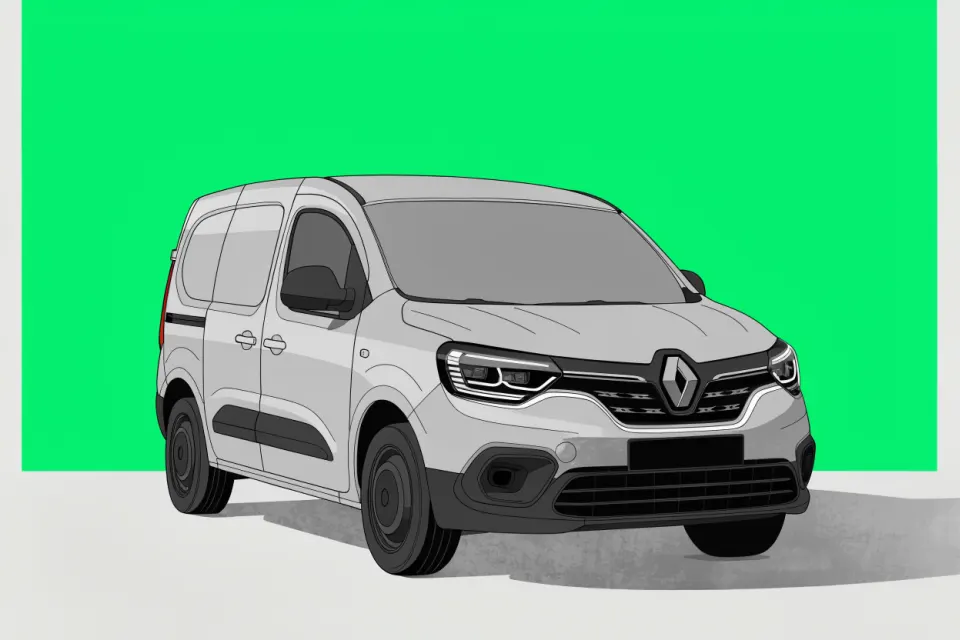
- Most economical small diesel van: the Renault Kangoo Van L1H1 and the Ford Transit Courier tie at 53.3 mpg. The Kangoo carries 164kg more.
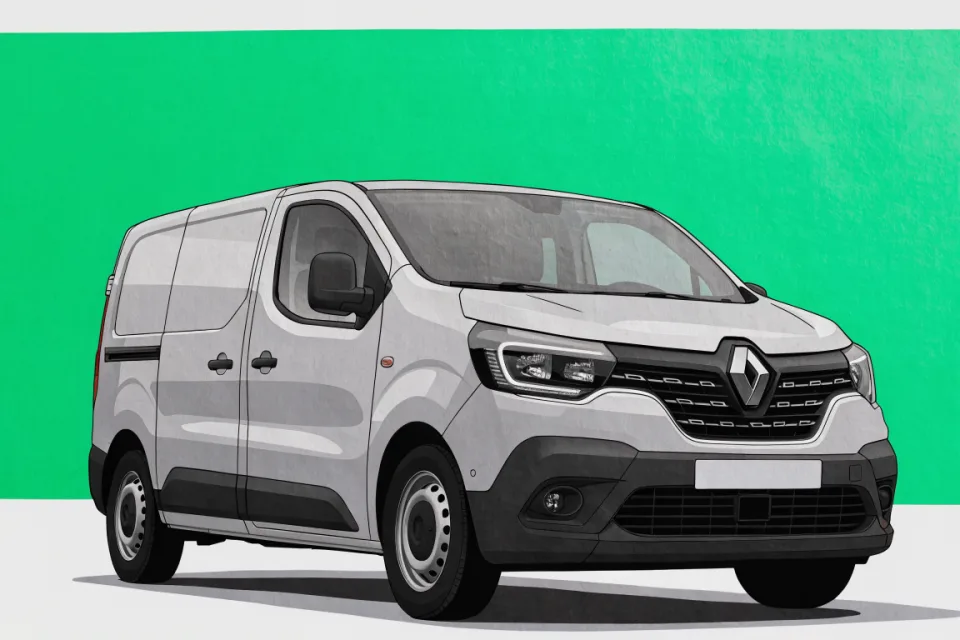
- Most economical medium diesel van: the Renault Trafic L1H1, at 42.2 mpg.
- Most economical large diesel van: the Renault Master L2H2, at 38.2 mpg, with the Nissan Interstar L2H2 at 37.7 mpg.
- Fuel a mile, before VAT: 14.1p for the best small vans, 17.8p for the best medium van and 19.7p for the best large van, with diesel at 165.5p a litre before VAT.
- Read the range: where a maker publishes a range of figures, ask for the figure for the exact specification you are ordering.
How we ranked them
The figures are official combined fuel economy under WLTP, the Worldwide Harmonised Light Vehicle Test Procedure, as each manufacturer publishes it in its current UK price list or brochure. THRIVE records the figure and the page it came from for every van, and a figure that cannot be traced to the maker never reaches a list. Where a maker publishes a range, THRIVE uses the cautious end. Vans not yet on sale, or no longer sold new, are left out, as are pickups.
That leaves 88 diesel versions across 28 models. Twelve diesel versions on sale have no verified official figure in the database yet and are not ranked: the Iveco Daily, MAN TGE, Maxus Deliver 9 and Nissan Primastar. Each table below shows the most economical version of each model, so that one model with many body lengths does not crowd the list. Fuel cost uses the UK average diesel price for the week of 2 November 2026 from the Department for Energy Security and Net Zero, 198.6p a litre, or 165.5p before VAT. Most businesses reclaim the VAT on fuel, so the costs below exclude it. The annual figure is for 18,000 miles, the mileage THRIVE uses across its fleet cost data.
WLTP is a laboratory test. The government's Vehicle Certification Agency describes it as a closer representation of real-world consumption than the test it replaced, and says variations in driving styles, vehicle accessories and additional weight carried will affect the figure a driver achieves. A van is rarely driven empty, so treat the figures as a fair comparison between vans and not as a forecast of your fuel bill.
The most economical small diesel vans
| Model (best version) | Official mpg | Fuel a mile | Fuel a year (18k miles) | Payload | Load space | Price |
|---|---|---|---|---|---|---|
| Renault Kangoo Van L1H1 | 53.3 | 14.1p | £2,541 | 836kg | 3.3m³ | £22,300 |
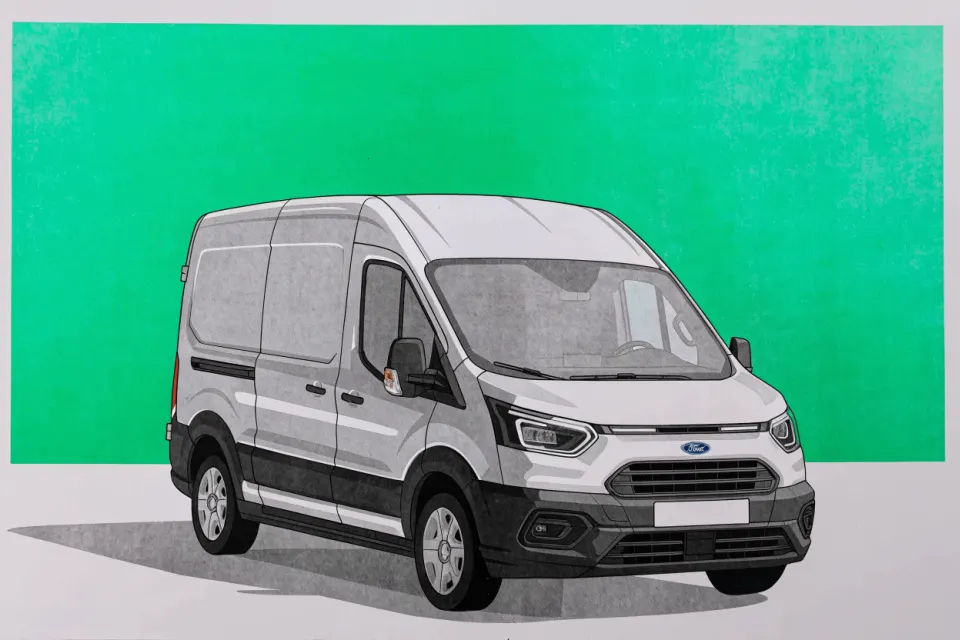
| Ford Transit Courier L1H1 | 53.3 | 14.1p | £2,541 | 672kg | 2.9m³ | £19,050 |
| Toyota Proace City L1H1 | 52.3 | 14.4p | £2,589 | 990kg | 3.8m³ | £24,753 |
| Ford Transit Connect L1H1 | 52.2 | 14.4p | £2,594 | 739kg | 3.1m³ | £24,600 |
| Volkswagen Caddy Cargo L1 | 50.4 range 50.4 to 53.3 | 14.9p | £2,687 | 733kg | 3.1m³ | £26,145 |
| Citroën Berlingo L1H1 | 46.0 range 46.0 to 54.4 | 16.4p | £2,944 | 982kg | 3.3m³ | £23,470 |
| Fiat Doblò L1 | 46.0 range 46.0 to 54.4 | 16.4p | £2,944 | 982kg | 3.3m³ | £23,470 |
| Peugeot Partner L1H1 | 46.0 range 46.0 to 54.4 | 16.4p | £2,944 | 982kg | 3.3m³ | £23,470 |
| Vauxhall Combo Cargo L1H1 | 46.0 range 46.0 to 54.4 | 16.4p | £2,944 | 982kg | 3.3m³ | £24,065 |
Two vans share the top spot at 53.3 mpg: the Renault Kangoo Van L1H1 with the 95hp engine, and the Ford Transit Courier. They use the same fuel, 14.1p a mile before VAT, but they are not the same van. The Kangoo is rated to carry 836kg against the Courier's 672kg, and has 3.3m³ of load space against 2.9m³. The Courier is the cheaper of the two at £19,050 before VAT, against £22,300.
The Toyota Proace City is a whisker behind at 52.3 mpg and is the small van here that carries most, at 990kg. The Ford Transit Connect and Volkswagen Caddy Cargo follow. Citroën, Fiat, Peugeot and Vauxhall publish a range for their small diesel vans, 46.0 to 54.4 mpg, and THRIVE ranks them at 46.0. More on that below.
Across the class the spread is narrow. From the best small version to the worst is £403 a year at 18,000 miles. In a small van, payload, load length and price will usually decide the choice before economy does.
Small diesel vans: fuel a year at 18,000 miles
Best version of each model, official WLTP economy, diesel at 165.5p a litre ex VAT
Show the figures as a table
| Renault Kangoo Van L1H1 | £2,541 |
|---|---|
| Ford Transit Courier L1H1 | £2,541 |
| Toyota Proace City L1H1 | £2,589 |
| Ford Transit Connect L1H1 | £2,594 |
| Volkswagen Caddy Cargo L1 (range, cautious end) | £2,687 |
| Citroën Berlingo L1H1 (range, cautious end) | £2,944 |
| Fiat Doblò L1 (range, cautious end) | £2,944 |
| Peugeot Partner L1H1 (range, cautious end) | £2,944 |
| Vauxhall Combo Cargo L1H1 (range, cautious end) | £2,944 |
The most economical medium diesel vans
| Model (best version) | Official mpg | Fuel a mile | Fuel a year (18k miles) | Payload | Load space | Price |
|---|---|---|---|---|---|---|
| Renault Trafic L1H1 | 42.2 | 17.8p | £3,209 | 1,066kg | 5.8m³ | £30,300 |
| Citroën Dispatch L1H1 | 40.9 range 40.9 to 45.6 | 18.4p | £3,311 | 1,326kg | 5.3m³ | £31,305 |
| Peugeot Expert L1H1 | 40.9 range 40.9 to 45.6 | 18.4p | £3,311 | 1,326kg | 5.3m³ | £31,305 |
| Vauxhall Vivaro L1H1 | 40.9 range 40.9 to 45.6 | 18.4p | £3,311 | 1,326kg | 5.3m³ | £32,150 |
| Fiat Scudo L1H1 | 40.9 range 40.9 to 44.8 | 18.4p | £3,311 | 1,173kg | 5.3m³ | £30,005 |
| Mercedes-Benz Vito L2H1 | 40.4 | 18.6p | £3,352 | 886kg | 6.0m³ | £34,275 |
| Toyota Proace L1H1 | 39.2 range 39.2 to 42.1 | 19.2p | £3,455 | 1,400kg | 5.8m³ | £32,503 |
| Ford Transit Custom L1H1 | 39.2 | 19.2p | £3,455 | 1,354kg | 5.8m³ | £35,950 |
| Volkswagen Transporter L1H1 Kombi (crew van) | 35.8 range 35.8 to 39.8 | 21.0p | £3,783 | 1,153kg | n/a | £37,080 |
The Renault Trafic L1H1 leads at 42.2 mpg, or 17.8p a mile. Behind it, the Citroën Dispatch, Peugeot Expert and Vauxhall Vivaro share a published range of 40.9 to 45.6 mpg and carry 1,326kg, about 260kg more than the Trafic. The Toyota Proace and Ford Transit Custom both read 39.2 mpg; the Proace is rated at 1,400kg, the highest payload in this table.
The Volkswagen Transporter comes last on this measure. Its most economical version in THRIVE's database is the Kombi with a manual gearbox, at 35.8 mpg; the panel vans with the 150PS engine are listed with an eight-speed automatic and read 33.6 to 34.0 mpg at the cautious end of their ranges. From the best medium version to the worst is £821 a year at 18,000 miles.
Medium diesel vans: fuel a year at 18,000 miles
Best version of each model, official WLTP economy, diesel at 165.5p a litre ex VAT
Show the figures as a table
| Renault Trafic L1H1 | £3,209 |
|---|---|
| Citroën Dispatch L1H1 (range, cautious end) | £3,311 |
| Peugeot Expert L1H1 (range, cautious end) | £3,311 |
| Vauxhall Vivaro L1H1 (range, cautious end) | £3,311 |
| Fiat Scudo L1H1 (range, cautious end) | £3,311 |
| Mercedes-Benz Vito L2H1 | £3,352 |
| Toyota Proace L1H1 (range, cautious end) | £3,455 |
| Ford Transit Custom L1H1 | £3,455 |
| Volkswagen Transporter L1H1 Kombi (crew van) (range, cautious end) | £3,783 |
The most economical large diesel vans
| Model (best version) | Official mpg | Fuel a mile | Fuel a year (18k miles) | Payload | Load space | Price |
|---|---|---|---|---|---|---|
| Renault Master L2H2 | 38.2 | 19.7p | £3,545 | 1,304kg | 10.8m³ | £34,300 |
| Nissan Interstar L2H2 | 37.7 | 20.0p | £3,592 | 1,366kg | 10.8m³ | £34,990 |
| Toyota Proace Max L2H2 | 36.2 website figure; see below | 20.8p | £3,741 | 1,475kg | 12.0m³ | £34,837 |
| Mercedes-Benz Sprinter L2H1 | 34.4 | 21.9p | £3,937 | 1,199kg | n/a | n/a |
| Ford Transit L2H2 | 33.6 | 22.4p | £4,031 | 1,479kg | 10.0m³ | £48,045 |
| Citroën Relay L2H2 | 30.4 range 30.4 to 44.8 | 24.7p | £4,455 | 1,425kg | 11.5m³ | £34,045 |
| Fiat Ducato L2H2 | 30.4 range 30.4 to 44.8 | 24.7p | £4,455 | 1,425kg | 11.5m³ | £34,045 |
| Peugeot Boxer L2H2 | 30.4 range 30.4 to 44.8 | 24.7p | £4,455 | 1,425kg | 11.5m³ | £34,045 |
| Vauxhall Movano L2H2 | 30.4 range 30.4 to 44.8 | 24.7p | £4,455 | 1,425kg | 11.5m³ | £34,945 |
| Volkswagen Crafter L2H2 | 26.6 range 26.6 to 32.5 | 28.3p | £5,091 | 1,229kg | 10.7m³ | £41,285 |
The spread is widest in large vans, where most of the fuel goes. The Renault Master L2H2 leads at 38.2 mpg and 19.7p a mile, followed by the Nissan Interstar L2H2 at 37.7 mpg. Both use a 130hp engine. The Toyota Proace Max L2H2 follows at 36.2 mpg and carries 1,475kg.
The Ford Transit L2H2, at 33.6 mpg, has the highest payload in the table at 1,479kg. THRIVE's record plates it at 3,550kg where UK listings show 3,500kg, so its 4kg lead over the Toyota Proace Max should be read as level. It is also the most expensive van in the table with a list price, at £48,045 before VAT for the Leader trim THRIVE records. The Volkswagen Crafter is at the bottom, at 26.6 mpg for the medium-wheelbase high-roof version.
Between the most economical large version in the database, the Master L2H2, and the least, the long-wheelbase Crafter Maxi at 25.7 mpg, the Master's fuel bill is 32.7% lower. At 18,000 miles that is £3,545 a year against £5,270, a difference of £1,724 a van. Across a fleet of 20 large vans, it is £34,480 a year at today's price.
Large diesel vans: fuel a year at 18,000 miles
Best version of each model, official WLTP economy, diesel at 165.5p a litre ex VAT
Show the figures as a table
| Renault Master L2H2 | £3,545 |
|---|---|
| Nissan Interstar L2H2 | £3,592 |
| Toyota Proace Max L2H2 | £3,741 |
| Mercedes-Benz Sprinter L2H1 | £3,937 |
| Ford Transit L2H2 | £4,031 |
| Citroën Relay L2H2 (range, cautious end) | £4,455 |
| Fiat Ducato L2H2 (range, cautious end) | £4,455 |
| Peugeot Boxer L2H2 (range, cautious end) | £4,455 |
| Vauxhall Movano L2H2 (range, cautious end) | £4,455 |
| Volkswagen Crafter L2H2 (range, cautious end) | £5,091 |
Why the same van can read 30 mpg or 45 mpg
A range is not vagueness. The official WLTP rules work with the lightest and heaviest builds of a van family, so a maker can certify figures for different builds of the same van, and some makers print both ends rather than one figure. Makers do not print fuel economy the same way. Renault, Nissan and Mercedes-Benz print one combined figure for each version in their UK price lists. Ford's current price list carries no economy figures, so THRIVE uses the single figure Ford publishes elsewhere for each version. Citroën, Fiat, Peugeot and Vauxhall print a range, and so do Volkswagen, and Toyota for the Proace. Where a maker prints a range, THRIVE ranks the van at the cautious end, so a van published with a range can sit lower in the tables than a van published with one figure, without being any thirstier.
The widest range belongs to the large vans from Citroën, Fiat, Peugeot and Vauxhall. Their price lists give the Relay, Ducato, Boxer and Movano with the 140hp engine 30.4 to 44.8 mpg, with CO2 of 165 to 243g/km, and print that range against almost every length and roof height. Citroën also lists a second L3H2 140hp manual at 24.4 to 44.1 mpg. So the price list does not show where a particular L2H2 falls in it. At 30.4 mpg the fuel costs £4,455 a year at 18,000 miles; at 44.8 mpg it would cost £3,023. That range, £1,432 a year, is about four-fifths of the £1,724 gap between the best and worst large vans in the database.
Toyota is a mixed case. Its website gives the Proace Max 2.2D manual one figure, 36.2 mpg and 204g/km of CO2, without stating the length, and that is the figure THRIVE records and ranks. Its specification sheet, dated September 2024, gives 31.3 to 36.7 mpg for that engine and gearbox without tying the range to a length. Toyota's October 2026 price list gives the L2H2 manual 204 to 205g/km, the low-CO2 end of the sheet's range, which is why THRIVE ranks this van on the website figure and not at its usual cautious end. If the L2H2 were read at the bottom of that range, the Proace Max would fall from third to fifth in the large van table, behind the Sprinter and the Transit.
For a fleet buyer the lesson is the same either way. A single figure from one maker and the bottom of a range from another are not measured from the same starting point, so a gap of a few mpg between them is not proof that one van is thriftier. The figure that matters is the one for the exact specification being ordered, which the dealer or leasing company can ask the maker for before the order is placed.
What else decides the fuel bill
Official economy is measured on a defined test. Four things that the test holds steady will move the real figure further than the gap between most neighbouring vans in these tables.
- Load. A large van carrying a tonne is a different vehicle from the empty one on the rolling road. Compare economy only between vans that will carry the same work.
- Speed. Vans are tall and flat-fronted, and aerodynamic drag rises steeply with speed. Speed limiters and route planning are cheap levers.
- Gearbox and engine. In several ranges the automatic or the more powerful engine reads lower, as the Transporter panel vans and the long-wheelbase Kangoo's 115hp automatic (47.9 mpg against 49.6 mpg for the 95hp) show.
- Conversion. Racking, shelving and refrigeration add weight and sometimes drag. Payload falls with every kilo, and economy with it.

Diesel or electric?
For a fleet still buying diesel, economy is the main lever on running cost. For one comparing diesel with electric, the more useful number is the gap between them. THRIVE's Fleet Cost Index tracks the cost of a diesel mile against an electric one every week, and its van break-even estimates the annual mileage at which a medium electric van's higher list price is repaid by its lower energy cost. Electric van charging costs, from depot to public rapid chargers, are on the fleet charging costs page.
The fuel price moves the answer either way. The figures here use the price in the first week of November 2026. In the Budget on 28 October 2026 the government extended the temporary 5p a litre cut in fuel duty until 30 June 2027. On 1 July 2027 duty on diesel is due to rise from 52.95p to 60.59p a litre, the 5p restored plus an inflation increase, according to the Budget's table of rates. Before VAT, that adds 7.6p to every litre; in the most economical large van it is about 0.9p a mile. THRIVE's weekly fuel prices page tracks the pump price as it changes.
The full lists
THRIVE's van lists update themselves as figures are added or corrected. Every version, not only the best of each model, is on these pages:
- The most economical diesel vans, all sizes
- The most economical small vans
- The most economical medium vans
- The most economical large vans
Questions fleets are asking
What is the most economical diesel van in the UK?
On official WLTP figures, the Renault Kangoo Van L1H1 with the 95hp engine and the Ford Transit Courier, both at 53.3 mpg. Among medium vans it is the Renault Trafic L1H1 at 42.2 mpg, and among large vans the Renault Master L2H2 at 38.2 mpg.
How much does it cost to run a diesel van per mile?
With diesel at 165.5p a litre before VAT (198.6p including it), fuel costs 14.1p to 16.4p a mile in a small van, 17.8p to 22.4p in a medium van and 19.7p to 29.3p in a large van, before VAT, on official economy. Load, driving style and accessories will affect what a van actually uses.
Why do some vans have two fuel economy figures?
Some makers publish a range of official figures for a van and others publish one figure per version. THRIVE ranks a range at its cautious end. Ask for the figure for the exact specification you are ordering.
Is the official mpg for vans realistic?
It is a fair comparison between vans because every van takes the same test. The Vehicle Certification Agency says driving style, accessories and additional weight carried will affect the economy you actually achieve, so a loaded van will use more fuel than its official figure.
How we did this
This is a THRIVE Intelligence analysis. The rankings and costs were calculated in code from the figures below; the fuel economy figure for every van is the manufacturer's own, recorded in THRIVE's van database with the page it came from.
Primary documents
- DESNZ: weekly road fuel prices
- Vehicle Certification Agency: the Worldwide Harmonised Light Vehicle Test Procedure
- HM Treasury: Budget 2026, overview of tax legislation and rates, Annex A
- Manufacturers' UK price lists and brochures, linked from each van's page
THRIVE data
- THRIVE van database. 88 diesel versions on sale with a verified official economy figure, read 6 November 2026.
- THRIVE fuel prices. UK average diesel, week of 2 November 2026: 198.6p a litre including duty and VAT.
Fuel a mile = diesel price before VAT (165.5p a litre) x 4.54609 litres a gallon / mpg. Annual figures are for 18,000 miles. Payload, load space and price are for the same version as the economy figure. Where a maker publishes a range, the table uses the cautious end and says so, and the charts hatch those bars. The Mercedes-Benz Sprinter row has no list price or load space because THRIVE's database holds neither for that version.
Sources
DESNZ: weekly road fuel pricesVehicle Certification Agency: WLTPHM Treasury: Budget 2026, Annex AHow THRIVE sources and checks its stories · Corrections, and how to report an error
Electric van charging costs: what each van costs a mile, from depot to rapid charger
THRIVE's medium electric van break-even is down 25.8% since July to 8,566 miles a year
New Renault Trucks E-Tech Trafic targets 470km range ahead of 2027 launch
The Tuesday briefing
The week's fleet numbers and news, every Tuesday morning. Free.
One email a week. Unsubscribe in a click.
Named in this story? You have a right of reply: email hello@thrivefleet.co.uk and a challenged claim will be marked under review while we check it.
Got a story, or a question about this one? Contact the newsroom. We read everything that comes in. With the volume of fleet news, not everything can run, but a story with a number, a date or a decision in it stands a good chance.